The Trash Mountains of South Asia That Threaten the Climate
Dumps, landfills and waste sites in India, Pakistan and Bangladesh are huge emitters of methane, a potent greenhouse gas.
Piles of garbage near South Asian megacities are contributing to some of the world’s strongest and most persistent methane emissions, highlighting a major challenge in the global climate fight.
More clouds of the powerful greenhouse gas — which has 84 times the warming power of carbon dioxide over its first 20 years in the atmosphere — were spotted in India than any other country except for the US during the first half of this year, according to European Space Agency satellite observations analyzed by Kayrros SAS. Pakistan ranked fourth and Bangladesh sixth.
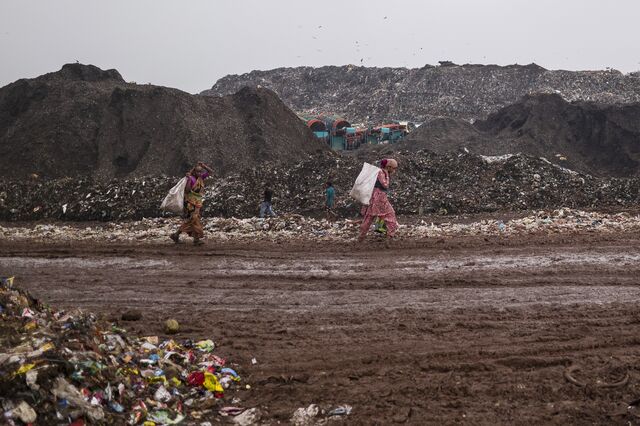
The source of emissions in South Asia is different than in the US or Russia, which are major fossil fuel producers. In those countries, the lion’s share of releases observed by satellite is linked to leaks from oil, gas and coal operations. Last year, more than half of all methane emissions measured globally from landfills by Canada-based monitoring company GHGSat Inc. were in Asia. India accounted for nearly a quarter of the total.
Emissions Origin Story
Methane releases in South Asia are driven by sources like dumps and rice cultivation.

“Having landfills around cities is not unique to South Asia, but what is different is the landfill gas management systems,” said Brody Wight, sales director at GHGSat. “Whether they exist or not to begin with is probably the primary factor.”
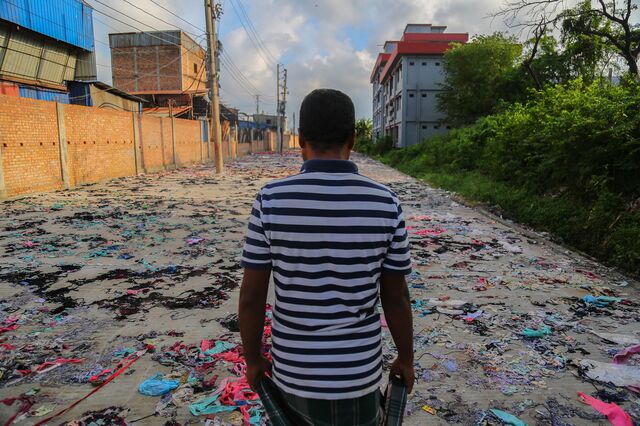
Waste sites generate methane when organic material like food scraps or cardboard breaks down in the absence of oxygen. Though satellites have linked multiple South Asia megacities with methane hotspots, holes remain in the data and some regions are more difficult to map because of light intensity and cloud cover. China, for instance, is the world’s largest source of methane from landfills and waste, followed by South Asia, the US and Southeast Asia, according to a report from non-profit group Global Alliance for Incinerator Alternatives, known as GAIA.
Failing to curb releases from the waste sector, which is responsible for about 20% of all methane generated from human activity, could derail global climate goals. Diverting food scraps and other organics before they enter a landfill is crucial to limiting future emissions. The impact of legacy dumps can be mitigated through aerating piles of trash and gas capture systems.
Although authorities in many South Asian urban centers are pursuing these solutions, satellites are starting to reveal the true scope of the problem for the first time.
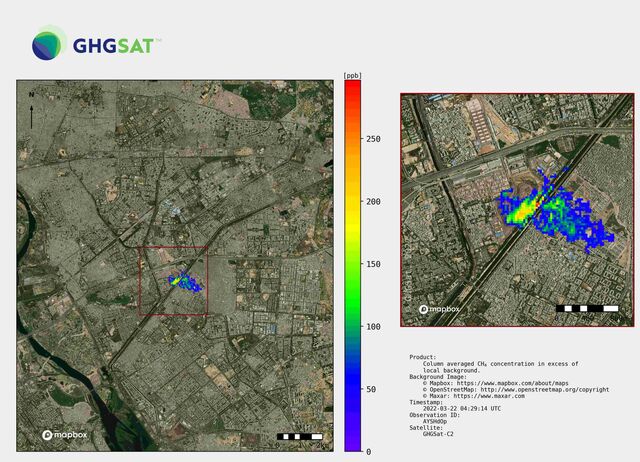
The Ghazipur dump on the outskirts of India’s capital, New Delhi, spewed roughly 2.17 metric tons of methane an hour on March 22, the day a GHGSat satellite passed overhead. If that emissions rate was sustained over a year, the leak would have the same short-term climate impact as the annual emissions from 350,000 US cars.
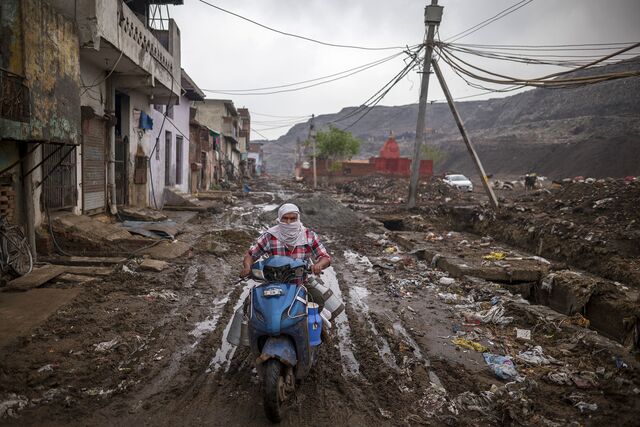
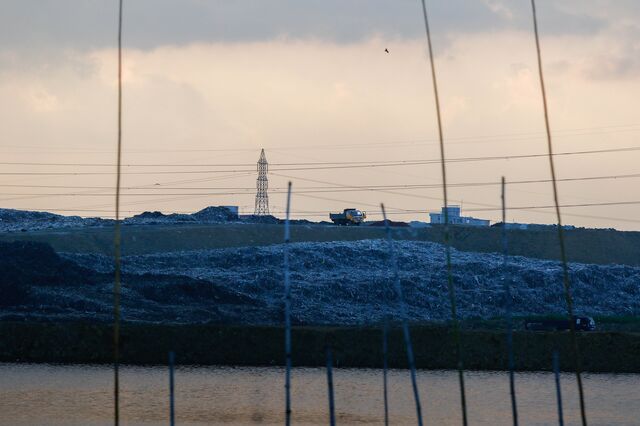
The site opened in 1984 and is now one of the world’s most hazardous. Its height fluctuates but in 2019 it stood around 15 stories high. Covering roughly 70 acres, the dump is big enough to accommodate the globe’s largest cricket venue, Narendra Modi Stadium. The landfill is a disease vector that helps spread tuberculosis. Fires periodically ignite due to leaking methane. In 2017, monsoon rains caused a waste landslide that killed two people.
When a reporter visited on a recent grey, drizzly morning, the stench of waste permeated through rolled-up car windows and masks. More than a dozen earth movers and trommel machines worked to segregate plastic waste from more decomposable organic matter. Dirty mattresses, suitcases and even shoes were visible in the sticky mud.
India’s Ministry of Environment, the East Delhi Municipal Commissioner and two spokespeople for the Delhi government didn’t respond to emails and phone calls seeking comment about the emissions. In April, the National Green Tribunal, which handles some of India’s most urgent environmental issues, said Delhi’s three landfills — a list that includes Ghazipur — must expedite plans to clear legacy waste and expand bio-mining capacity.
That aligns with Prime Minister Narendra Modi’s Clean India campaign, through which the federal government plans to spend 41.52 billion rupees ($519 million) to clean up legacy waste at landfills in more than 600 cities by 2026. The South Delhi Municipal Corp. is in the process of building a new sanitary landfill.
Plenty of waste sites outside Asia are also major emitters. Despite activating a 5-megawatt power station last summer that runs off methane collected from the massive Norte III landfill in Buenos Aires, GHGSat said its satellites continue to observe emissions from the site and from many land disposal sites globally. Methane is the primary component of natural gas. The biogas generated from landfills is usually composed of methane and carbon dioxide and may also contain ammonia or organic compounds.
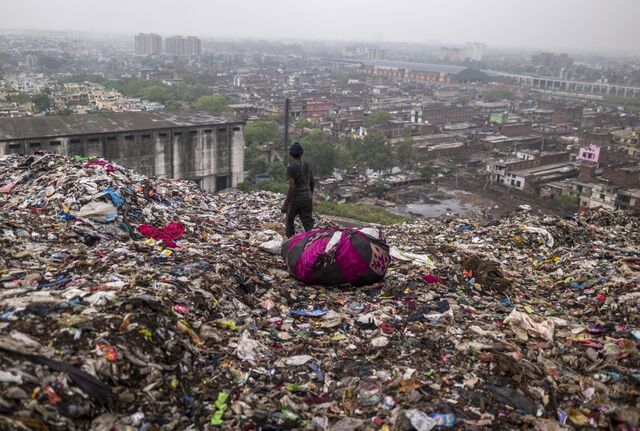
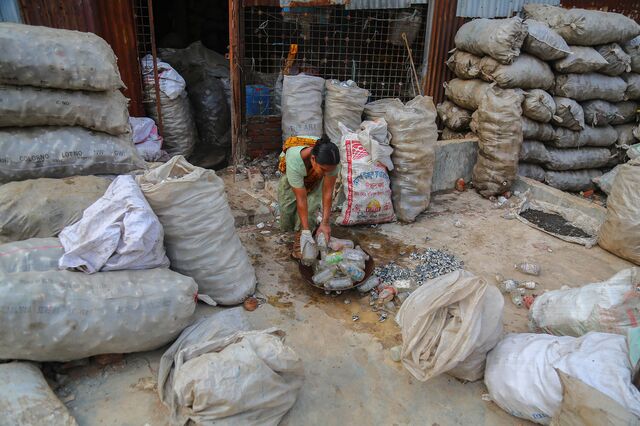
In India, more than 60% of waste is composed of organics that often originate from markets where vegetables, meat and poultry and other food is sold, according to Shibu K. Nair, GAIA’s India coordinator. Plastic, metal and materials that can be recycled are generally recovered at the source or at dump sites by contractors and informal salvaging networks.
“Right now the kind of waste dumps you see around South Asia are a threat in terms of climate and we need to address it,” he said.
One of the simplest solutions is to divert organic waste at the source. This approach has worked in South Korea, where the government outlawed dumping food into landfills in 2005 and now requires households to place scraps in special bags and deposit them in food waste bins. That’s boosted the country’s recycling rate to over 90% in 2020. Several decades ago almost all food entered land disposal sites.
In the southern Indian state of Kerala, the authorities are helping locals implement decentralized solid waste management systems that promote composting. The programs reached about 70% of households by 2017.
New technology is also being used to separate mixed waste streams. Ontario-based Anaergia Inc. has developed a system that functions a bit like a giant garlic crusher, with a metal piston exerting pressure to squeeze out more than 90% of the organic material. The paste is then placed into an anaerobic digester where microbes break it down and methane is captured.
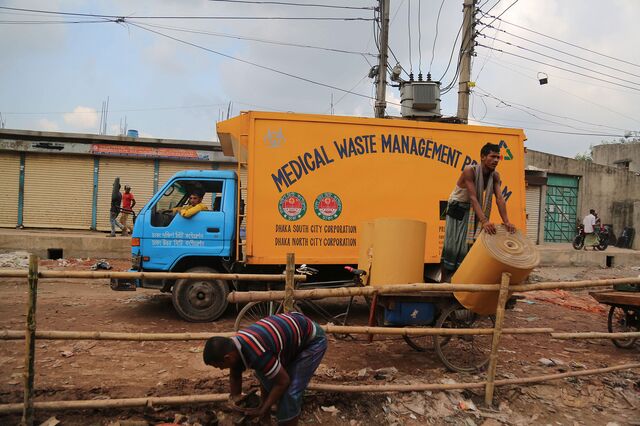
Last year, after Bloomberg reported on emissions from the Matuail Sanitary Landfill in Dhaka, Bangladesh’s environment ministry said it had formed a committee to assess the problem. A consulting firm has been appointed to determine the amount of methane leaking from the landfill and groundwork will start soon, an official with the Dhaka South City Corp., which manages the site, said this month.
The spokesman for the agency said the “initial veracity” of Bloomberg’s previous report “was not found.”
Meeting shared global climate goals will require sacrifices from all countries. But many rich nations have polluted for centuries and continue to have much higher emissions per capita than poorer states still aiming to boost incomes, food security and offer basic services.
Still, there is concern that some leaders aren't doing enough. India and Bangladesh, for instance, have yet to join the Global Methane Pledge, a US and EU-backed initiative joined by more than 100 other nations that aims to cut emissions of the greenhouse gas by 30% within a few years.
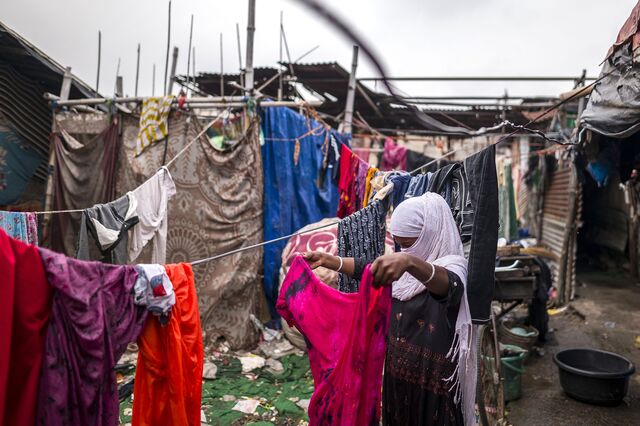
For those living in the slums near Ghazipur, the human toll of the dump is as palpable as heat waves that struck Europe and the subcontinent this year. Events that are being driven in part by human-generated methane — which scientists say is responsible for about 30% of global warming.
Owais, 28, a private contractor who goes by one name and lives near Ghazipur, said he feels powerless.
“In our area, you will find very few people who are older than 50 years old. Most of us have health problems,” he said. “There’s no government health center in our community and many people don’t realize that pollution from the dump is what is causing health problems. Those of us who understand can’t do much about it.”
—With assistance from Arun Devnath, Ismail Dilawar, and Heesu Lee