What 4.8 Million Scams Look Like
Here are all the ways to get defrauded, according to the U.S. government.
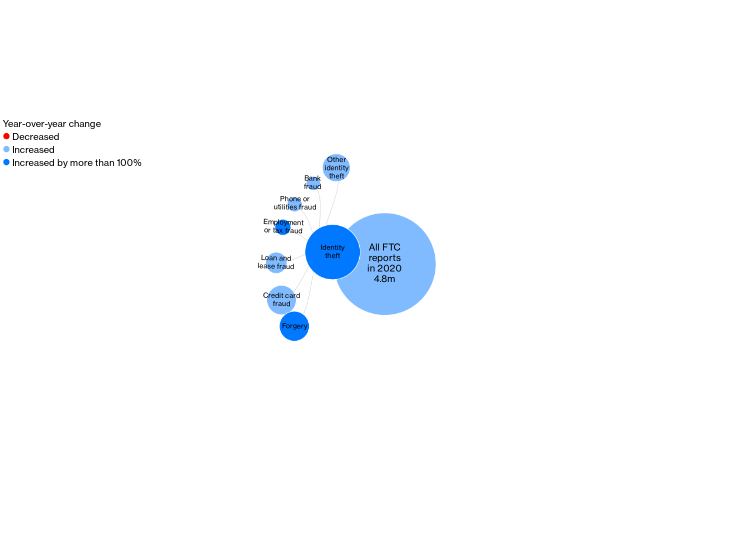
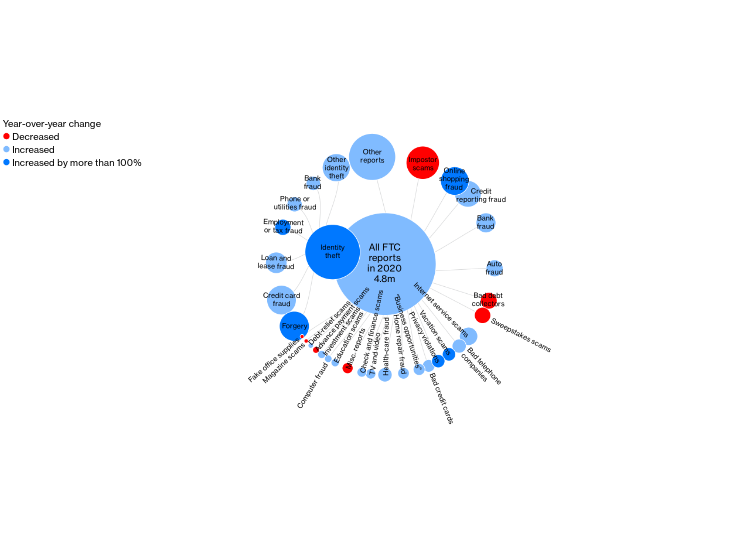
The Federal Trade Commission’s Sentinel database tracks fraud reports from U.S. consumers, including romance impostors, work-from-home scammers, and shady e-commerce sellers. This is a breakdown of all the agency's 2020 reports.
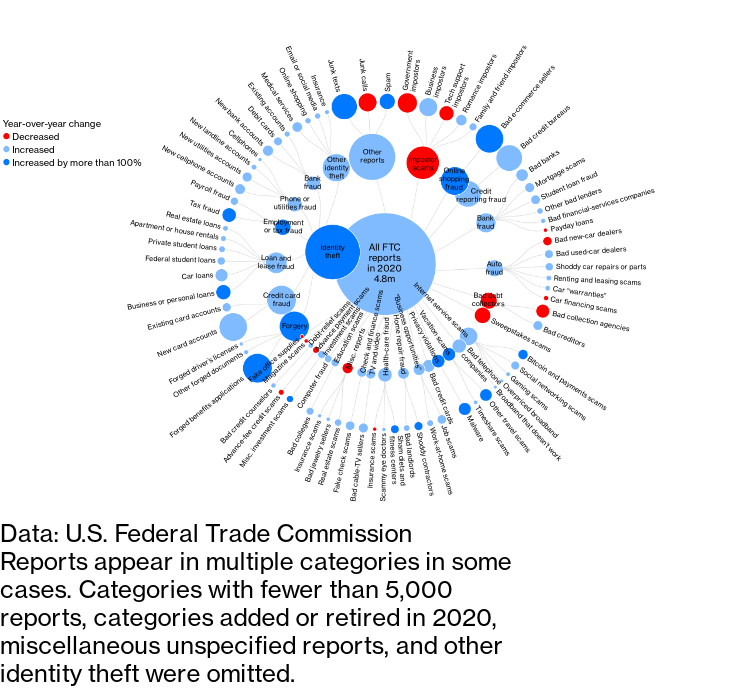
Reports appear in multiple categories in some cases. Categories with fewer than 5,000 reports, categories added or retired in 2020, miscellaneous unspecified reports, and other identity theft were omitted.
Data: U.S. Federal Trade Commission

Reports appear in multiple categories in some cases. Categories with fewer than 5,000 reports, categories added or retired in 2020, miscellaneous unspecified reports, and other identity theft were omitted.
Data: U.S. Federal Trade Commission