The Fed Wakes Up to Race
The mighty Federal Reserve wants to help level the playing field. Is it up to the task?
The scene that Wednesday was familiar, yet startling all the same. Here was another great American institution openly struggling with its fraught history on race.
Familiar because of the subject, one of the defining stories of our time, and startling because the institution: the U.S. Federal Reserve — the high temple of American capitalism.
Dialing into the Fed webinar that October day from Atlanta was Raphael Bostic, the first Black person ever to run one of the 12 regional Fed banks. Endemic racism, Bostic told viewers, not only blights lives and livelihoods, it also exacts a heavy economic toll.
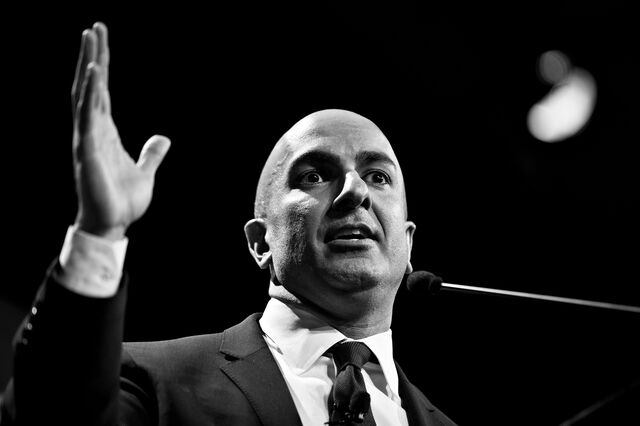
True, said Neel Kashkari, his counterpart in Minneapolis, but fighting inequality hasn’t historically been the Fed’s job. Its formal mandate, he noted, is to minister to the economy as a whole.
Then Ursula Burns, the first Black woman to lead a Fortune 500 company, delivered a blunt message. The Fed, she said, was ducking its responsibility to people of color by acting as if its policies were color blind.
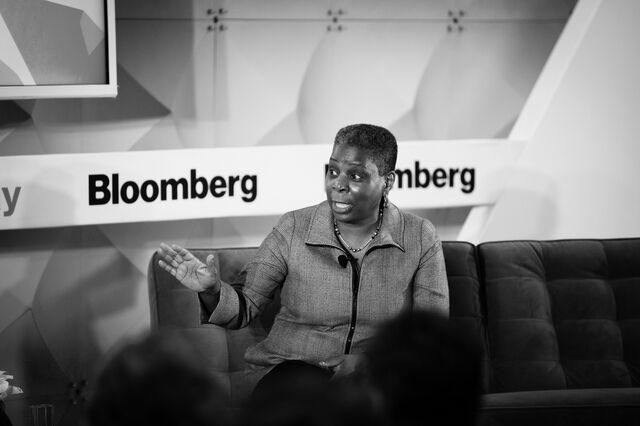
“It embarrasses me,” said Burns, the former CEO of Xerox. “I don’t believe you are as boxed in as you guys would say you are.”
Burns was just getting started. Discounting racism “wipes history away,” she said. “I want you to use the tools at your hand to actually build and develop a more inclusive society.”
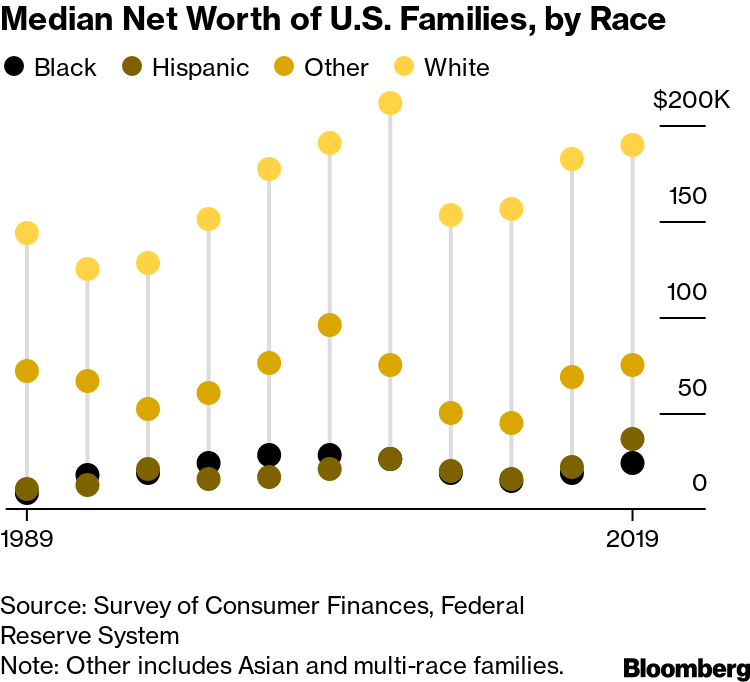
Median Net Worth of U.S. Families, by Race
The racial reckoning has come to every corner of American life — even, it turns out, at the mighty Fed.
It took more than 100 years. But before the world saw George Floyd face down on the pavement; before uprisings took hold in cities in every state; in short, before a lot of America began to wake up to the stark realities of its divisions, the nation’s central bank was stirring.
Faced with increasing political pressure, policymakers had begun to question their own role in achieving true justice and equality. What, if anything, should the Fed do? What does the Fed owe Black Americans?
The precise answer to that question is subject to debate. But a half-century since civil rights protests drove the United States to outlaw state-sanctioned racism, the Fed wants to bring the charged topic of racial inequality into its discussions of monetary policy. “Broad-based” and “inclusive” are its operative words.
In a few days, Donald Trump will take his exit. Joe Biden will raise his right hand. And this year, the Federal Reserve’s 108th, might very well mark a turning point.
The stakes are enormous. The Fed is rare among central banks in having two equal mandates. Under federal law, its mission is to hold inflation at bay while, at the same time, maximizing employment. In 2015, the most recent year for which full public records are available, race was mentioned just twice in over a thousand pages of transcripts documenting meetings of the Federal Open Market Committee, the Fed’s inner sanctum.
The timing is also perilous. The Fed’s discussions about race began before the pandemic shutdowns sank the economy and made inequality even worse. The past year has already left an indelible mark. To prop up the economy, the Fed has slashed interest rates, bought vast sums of bonds and undertaken historic emergency loan programs. It’s likely to keep rates low for years to let the economy run a bit hotter.
President-elect Biden, for his part, is talking about spending trillions more on pandemic relief, and bond markets are starting to register the risk, however remote, that inflation might creep up.
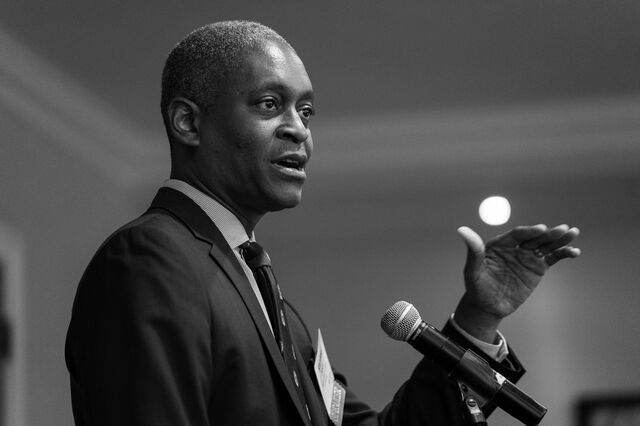
Bostic, who wrote poignantly on race last year, says there’s no turning back. Given how the current Fed is talking and thinking about race and inequality, it “will be difficult for future Feds not to acknowledge this as an issue and keep it in their sights,” he says. “We should be out in front on these things and not shy away from them.”
Traditionalists warn that factoring in new elements into the equation — targeting a lower Black unemployment rate, for example — might turn the institution into a testing ground for ideological experimentation and culture-war economics.
The Fed chair, Jerome Powell, has worked assiduously to shield the central bank from the vitriolic politics of Trump’s Washington. But Charles Plosser, former president of the Philadelphia Fed, warns that adding race and inequality to the Fed’s mix risks compromising its independence.
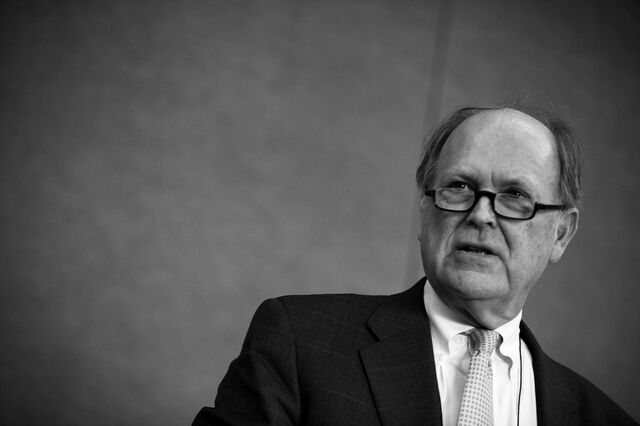
“This new framework will likely pull the Fed deeper into politics,” Plosser says. For businesses, investors and entire economies, the central bank’s decisions about whether to raise rates, cut them or leave them where they are could become “more discretionary and less systematic or predictable.”
As Plosser delicately puts it: “There are many constituencies which will argue at any point that employment could be higher in some group.”
At that moment, Jay Powell should have been stepping before a throng of reporters in Washington. Instead, he was standing behind a podium in a quarantine bubble to deliver an update on the economy, along with a statement he'd just run past his colleagues on the FOMC.
He went through the regular business via video conference that June afternoon and then paused.
“Finally,” he said, clearing his throat. “I want to acknowledge the tragic events that have again put a spotlight on the pain of racial injustice in this country.”
Powell went on: “The Federal Reserve serves the entire nation,” he said.
Serves the entire nation? The line sounds so obvious you might wonder why Powell even mentioned it. There’s only one Fed, after all. Wherever you go, Maine to California, the federal funds rate is the same (nowadays, basically zero).
Yet the traditional approach to setting monetary policy — essentially, examining trends and medians in the overall economy — ignores how race is lived. Finding a job, saving money, buying a home: Every traditional marker of economic success is, statistically speaking, vastly more difficult to reach for Black people than for White people.
Median Net Worth of U.S. Families, Black vs. White

Lately, with the pandemic, hard-won gains have been slipping away. Covid-19 has exposed old rifts and opened new ones as Black and Latino people have been disproportionately affected by the coronavirus and its economic damage.
Is that the Fed’s fault? Like Wall Street and the rest of corporate America, the Fed was a White man’s world for most of its history and, judging by its top ranks, mostly still is. Founded in 1913, during Jim Crow — the same year, in fact, that Woodrow Wilson segregated federal workplaces — the Fed simply didn’t worry much about racial inequality until very recently.
At the dawn of the civil rights movement, in the 1950s, the Fed’s decisions actually reinforced economic inequality. When the central bank tightened credit to head off wage inflation, it slowed growth and, in the process, set back progress for people on the lower rungs of the ladder.
The resulting economic pain eventually helped prompt Presidents John F. Kennedy and Lyndon B. Johnson to pursue policies in the ‘60s designed to help Black Americans. (Johnson also nominated the first ever Black Fed governor, Andrew Brimmer).
Then, in the ‘70s, inflation took off. Before long, a new Fed chairman, Paul Volcker, was raising rates once again, and this time, to record levels. Black unemployment swiftly soared to a staggering 21%. It wasn’t surprising: Over the past 50 years, in good times or bad, Black unemployment has often run at twice the level of White unemployment.
Unemployment Rate, Black vs. White

“No other constant in economics would be treated with such indifference,” Williams Spriggs, an economics professor at Howard University, a historically black college in Washington, says of the persistent employment gap.
Seth Carpenter, a former deputy director of monetary affairs at the Fed who is now an economist at UBS, recalls publishing a paper in the early 2000s that found when the Fed raises interest rates, Black employment takes a bigger hit than White employment.
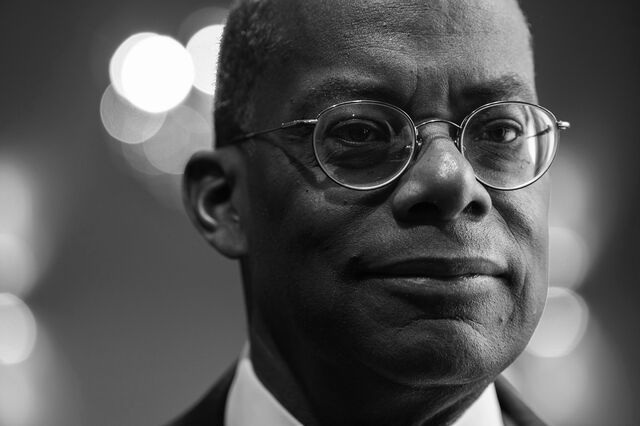
“There was exactly one person in the building who had any interest in talking about and understanding what the implications were,” Carpenter says. That person, he says, was the then-vice chairman, Roger Ferguson, who, like Carpenter, is Black.
All these years later, here we are. The disparities persist. Today the unemployment rate for Black Americans is 9.9%, while the rate for Whites is 6%.
“Broad-based and inclusive.”
The phrase might sound banal. But when it makes its way in the Fed’s prosaically titled “Statement on Longer-Run Goals and Monetary Policy Strategy,” it’s something else: potentially game-changing.
Those words appear in the third paragraph of that brief document, which was issued last August following a 20-month-long strategy review. It’s easy to read over them. The full passage reads as follows:
The maximum level of employment is a broad-based and inclusive goal that is not directly measurable and changes over time owing largely to nonmonetary factors that affect the structure and dynamics of the labor market.
Loosely translated: The supposedly color-blind Fed will finally start paying more attention to the Black unemployment rate and that of other minorities, too.
In practical terms, the change means the Fed might now let the economy rev a little higher before it starts tightening credit. The Fed’s target for inflation, 2%, can be viewed a little more loosely. Overall unemployment, this new thinking goes, can be allowed to fall further in order to give minorities a better chance to find good jobs.
Will the move make any real difference to the lives of Black Americans — or entangle the Fed in the politics of inequality at the expense of its core mission? Again, that remains to be seen.
Theresa Singleton, who oversees community affairs at the Philadelphia Fed and has been a leader in the internal push to address racial inequality, says that even just two years ago the central bank was reluctant to take it up.
“We knew we needed to create a narrative that people could use to address this work so it would not be identified or viewed as too political, or outside of the bounds of the Fed,” Singleton says.
The Fed was already becoming more comfortable talking about inequality before Powell took over.
But it was the events of 2020 that thrust the focus to racial inequality, and the lawyerly Powell who managed to put it on the Fed’s agenda in a serious way, says Spriggs, the Howard professor.
Earnings Gap Between Whites and Other Races, by Education Level

Other senior Fed officials have argued for change, too. Bostic, the Atlanta Fed president, routinely meets with his team on these issues. Even more, he talks openly about racial inequality to people outside the central bank — something that once would have been seen as taboo.
“The Fed has become much more comfortable just acknowledging the challenges, the burdens and the barrier that racism poses for the economy,” Bostic says. “That is actually an economic issue that is relevant for us to be talking about because it affects our mandate.”
Bostic says he hopes the new policy statement about “inclusive” goals will get economists thinking about these issues more. “One of the things I’m hopeful will happen as a result of us putting our statement out there is that it will spark a new set of research,” he says.
At the Minneapolis Fed, Kashkari is already on it. He created an internal think tank to examine disparities in general back in 2017, three years before Floyd’s death at the hands of the police convulsed the Twin Cities — and then the rest of the country.
One of Kashkari’s economists there, Abigail Wozniak, wants to incorporate more research on inequality into the Fed’s decision making. A staff member at the Council of Economic Advisers during the Obama years, she concedes the answers won’t arrive overnight. She is, after all, essentially asking people to reconsider decades of central-bank orthodoxy.
Pushing for change, too, will be the Biden administration. Jared Bernstein, one of President-elect Biden’s picks for the CEA, has already called on the Fed to consider focusing on Black unemployment instead of overall unemployment when considering interest rates. Meantime, congressional Democrats have introduced legislation that would require the Fed to issue regular reports on wealth and income gaps, as well as the central bank’s efforts to close them.
Back in Minneapolis, Wozniak considers an old chestnut among economists: If we can grow the pie, everyone can get a bigger slice.
“They are careful to say ‘can,’” Wozniak says. “But it’s kind of amazing how often we’ve grown the pie in this country, and folks have not gotten a bigger piece.”
—With assistance by Saijel Kishan and Andrew Husby
Track the forces driving change. Sign up for the Bloomberg Equality newsletter here.
More On Bloomberg
ll