

The Shrink Next Door
Part 5: The Last Straw
Detective novels. Personal memoirs. Patient notes. Marty Markowitz spent hundreds of hours typing and retyping them all, until he finally had enough.
Isaac Herschkopf, Manhattan psychiatrist, had a literary alter ego — Jamie Brandeis, a Manhattan psychiatrist who solves crimes using the power of psychiatry.
Brandeis is the brilliant protagonist of seven unpublished murder mysteries written by Herschkopf, with titles including “Some Like It Big” and “Some Like It Modest.” And that was just the beginning of the doctor’s literary output. In addition to lectures and published letters to the editor and columns, there were self-help books about marriage and family and a 1996 memoir describing a difficult childhood in a household of Holocaust survivors — a dozen manuscripts in all written by Herschkopf.
And typed by Marty Markowitz.
“I typed and retyped and retyped and retyped for him,” said Markowitz.
Markowitz still has the spiral notebooks that Herschkopf filled with longhand manuscripts. He’s kept them along with the photos, videos and reams of letters he gathered during the pair’s complex three-decade relationship.
Markowitz started therapy with Herschkopf in 1981. How that relationship morphed over the following decades is a matter of dispute: Markowitz says he was paying for therapy the whole time, while Herschkopf has said that after just a few years he’d become Markowitz’s business consultant. Either way, Markowitz paid the doctor more than $3 million, his records show — even as he spent many of his off hours as Herschkopf’s de facto secretary and personal assistant.
Herschkopf created “the structure of everything that was happening in my life,” Markowitz says. “An important aspect of that was keeping me very, very busy — especially on the weekends where I might have had time to think through things.”
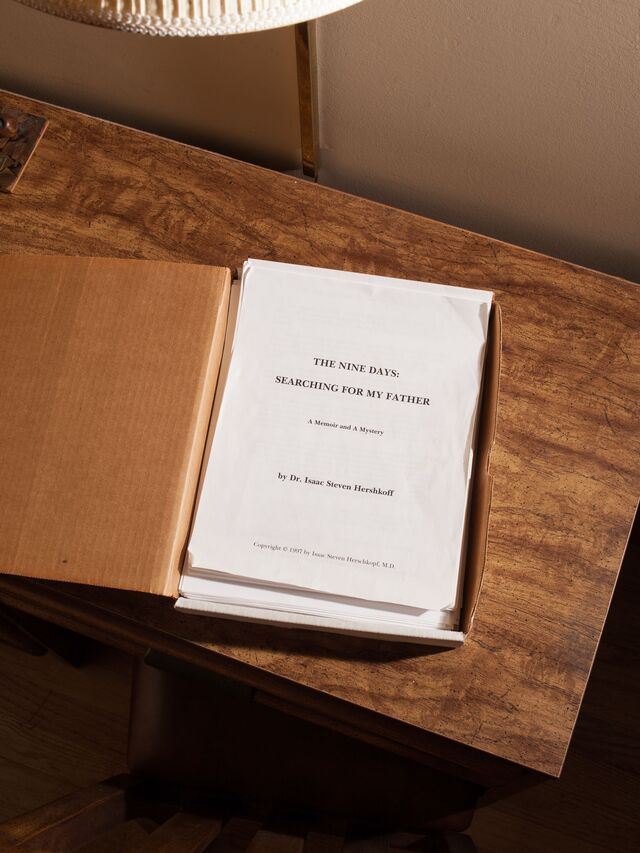
Eventually, Markowitz began to question that work. Only one of the doctor’s manuscripts had made it into print, a self-published book called “Hello Darkness, My Old Friend: Embracing Anger to Heal Your Life.” Markowitz began to doubt any others would be published, and he began to resent his time retyping manuscripts.
Markowitz also became discomfited by other material he had to type for the doctor, including letters that referred to other patients’ diagnosis and treatment — information that doctors typically guard closely.
That explains how Markowitz came to see a highly personal, six-page note to Herschkopf from a high-profile patient, Courtney Love.
Love, it appeared, had needed to send an urgent note from her hotel. It was 2003, and Herschkopf didn’t have a fax machine, Markowitz explained — and so the doctor had the actor-musician send her fax to Markowitz’s number.
“It’s such personal stuff,” Markowitz said. “Can you imagine that he had her send that to my office? It’s incredible.”
Love didn’t respond to requests for comment placed through her agent and a former lawyer.
I asked Herschkopf about the fax back in 2012, when I was first working on this story. He responded by email: “If it is real, it is stolen.” In more recent letters, he declined to address it.
As for suggestions he exerted broad control over Markowitz, the doctor wrote: “If I controlled him, why was I unable to prevent him from ingesting his nightly pint of Haagen-Dazs which led to his cardiac surgery?”
Markowitz, with training in accounting and law, was stewing over his payments to Herschkopf. He paid him $149,000 in 1994 alone, according to a tally he kept.
Making matters worse, Markowitz’s family fabrics business was struggling with the influx of cheaper Chinese textiles. Markowitz had for years paid Herschkopf from the company’s coffers, a growing burden.
The final straw, as with many breakups, was arguably a small thing. Markowitz needed a routine hernia operation. Herschkopf helped him find a doctor. But then, for days after the procedure, Herschkopf didn’t call to see how Markowitz was doing.
“I knew that he knew that he was the only person in my life,” Markowitz says. After nearly 30 years, something snapped. “All of these frustrations, all of these issues, all of this anger came bursting out of me,” he said.
Markowitz wrote a careful letter saying he wanted to take a few months off because his company could no longer afford Herschkopf’s fees. Maybe later, he wrote, he could return for an hour or so a month for a “minimal level of care.” He ended with a note of gratitude: “I carry you with me wherever I go and I literally hear your voice guiding me.”
The doctor’s response — handwritten — arrived a few days later.
“Marty,” the doctor wrote, “I fear that your current approach is a recipe for disaster.”
Markowitz was in no rush to respond. All that time with the psychiatrist had taught him a thing or two, and he was finally using it to stand up for himself.