Bloomberg Businessweek
The Electorate: America Divided
- The Data
- Partisan Ohio
- Middle Class
- Job Lovers
- Mark Cuban
- Old People
- American Frights
- Gun-Rights
- Counterculture
- Modern Church
- Drake Lessons
- Childcare
- Graduate Salaries
- Rural American Dream
- What’s at Stake?
- Population Growth
- Refugee Haven
- American-Made*
- Alt-Right
- The Anger Won't End
- America’s Divisions Are a Cause for Hope
Ohio’s Trumpiest Town Is Full of Former Democrats
In Ohio’s most partisan districts, it’s not about the lesser of two evils.
September 15, 2016
Photographs by Christopher Lee for Bloomberg Businessweek


What if this election isn’t about rage, after all, but about hope? It’s a jarring thought: Donald Trump and Hillary Clinton are the two least popular presidential candidates in modern history, engaged in a contest of surpassing ugliness, their most passionate supporters brimming with contempt for one another. If you follow the election on cable news or Twitter, or attend a rally, the people you encounter are the loudest, the angriest, the most eager to buttonhole reporters. And yet they’re also rarely representative of their own communities. They warp our view of the electorate. On the ground, things can look very different, even in the most partisan corners of a pivotal swing state such as Ohio, where a Sept. 14 Bloomberg poll of likely voters has Trump edging Clinton by 5 points.
Bloomberg Businessweek teamed up with the data science firm 0ptimus to identify the most pro-Trump and pro-Clinton districts in Ohio during the presidential primaries. These two districts, 75 miles apart, have many differences, most obviously in their racial composition. And indeed, in both places there are deep veins of animosity toward the candidate they oppose. But the citizens of southeast Cleveland, where Clinton’s Democratic support runs strongest, and those in the Rust Belt haven of Youngstown, whose Republicans, many newly minted, ardently favor Trump, didn’t see politics as being about the other side. It was about them. And by and large both groups conveyed a cautious optimism about their future and their preferred candidate.
Cleveland
Representative John Barnes Jr. was born into Cleveland Democratic politics, the son of a longtime city councilman who took up the family vocation. Today, he represents Ohio’s 12th State House District, a long crescent that sweeps from the far eastern suburb of Mayfield Heights down through Warrensville Heights to Bedford in the south. In the March Democratic primary, this heavily African American district went 74 percent for Clinton, her strongest showing anywhere in the state. Driving around his district one morning in late August, Barnes appears to know just about everyone who’d voted for Clinton and pulls over to let them explain why.
“We got hit hard by the recession,” he says, as we cruise past strip malls and small manufacturing plants. “If you look at downtown Cleveland today, it’s beautiful. Out here, though, the recovery has been uneven.” The local economy, built on manufacturing, has seen only sporadic improvement since 2008. “Those pockets of success have helped the community,” Barnes says, “but we still have a long way to go.”
Asked who they plan to vote for in November, the people we encounter sort neatly into two groups: “Clinton” and “not Trump.” Barnes suggests that the latter group is expressing annoyance at Trump, who had just begun his African American outreach effort. “The Clintons have a legacy around here that we haven’t forgotten,” he says. There’s little outward passion over the prospect of a Clinton presidency—certainly nothing to rival the excitement for Barack Obama in ’08. But neither is there any doubt that Clinton would continue to usher along the modest improvements that most people seemed to sense in their lives.
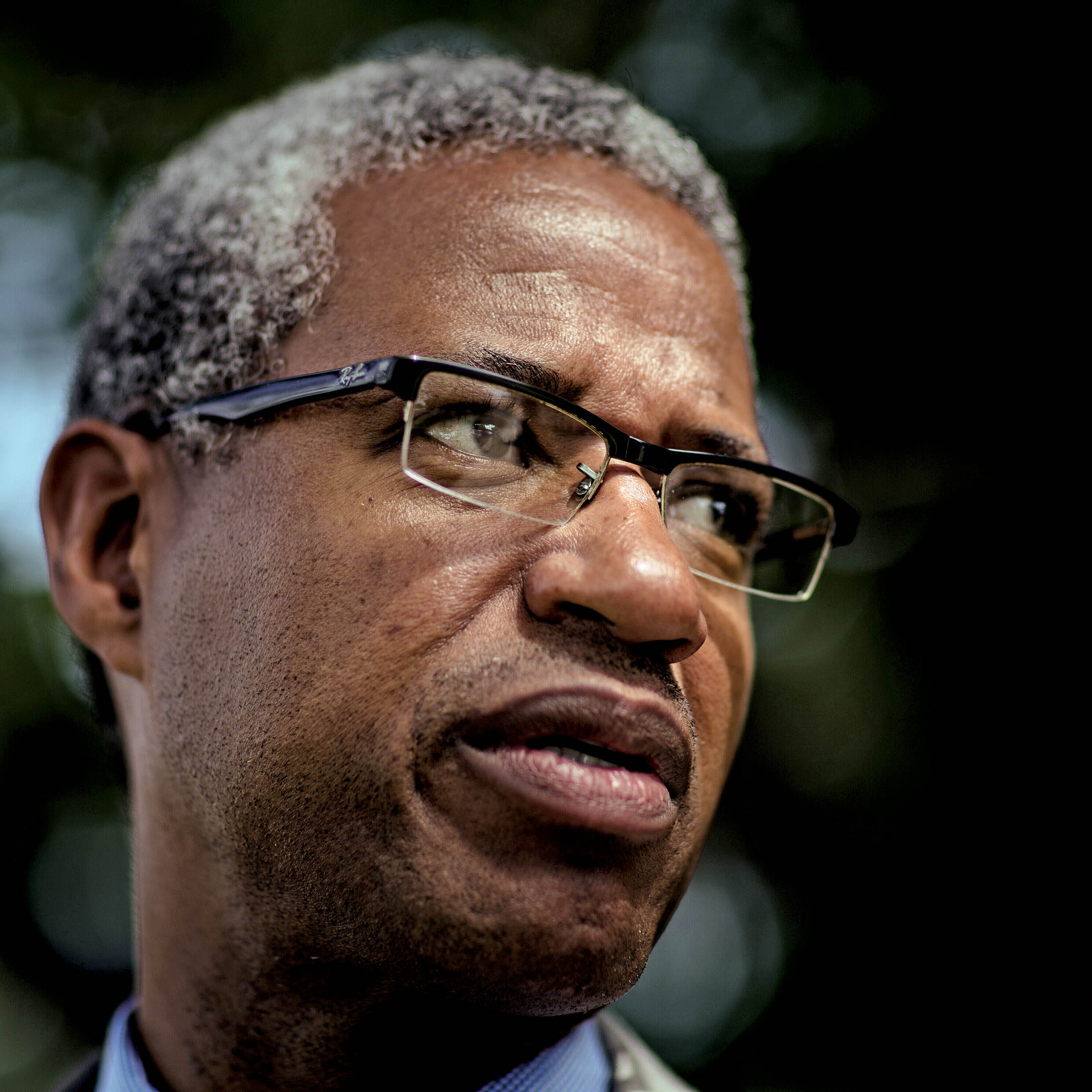

At a McDonald’s in the Lee-Harvard neighborhood of Cleveland, Barnes recognizes four elderly men having breakfast and arranges an impromptu focus group. “I’m a union man, always vote Democrat,” says Bobby Collins, 80, a retired Ford Motor worker. “Trump has no political knowledge, he’s no benefit to me.” Across the table, Katy Stephenson, 89, agrees. “As African Americans, I feel we’ll gain more under a Democratic regime,” he says. “The Republican Party is for people with money. We’re all retired.” Kervin Gilbert, 82, who worked 35 years as a municipal employee and still lives down the street, chafes at Trump’s depiction of black neighborhoods as crime-ridden war zones. “It was nice when I moved here, and it’s still pretty nice,” he says. Would he even consider Trump? “Man, when Trump comes on TV, I change the channel.”
A few miles down the road, at the Harvard Community Services Center, Clara Russell, 83, a retired travel agent, is playing dominoes with a friend beneath a poster of Malcolm X, Martin Luther King Jr., and Obama. She, too, is for Clinton. “She’s all about the kids,” Russell says. “And Trump is a damned idiot. He seems to think he’s a king.” Russell doesn’t understand how he thinks he’s going to get around Congress. Governing, she says, is about grinding out hard-fought, incremental gains, and she likes that Clinton, who recently visited her Baptist church, seems to understand this. On reflection, Russell decides, nothing Trump might do or say would sway the people she knows: “If he walked in here, the room would clear right out.”
There seems little chance of Trump showing up. Three days spent traveling through the 12th District yielded no sign of Trump or his campaign, even though Cuyahoga County, which encompasses the district, produced more votes for Mitt Romney in 2012 than all but two Ohio counties. If Trump were to materialize, he might be surprised at what he finds. Although local property values fell as much as 35 percent during the recession, the modest homes in towns such as Maple Heights and Bedford Heights have neatly clipped lawns, the streetlights function, and although shuttered businesses aren’t uncommon, a quiet civic pride prevails.
A week earlier, Trump had made a bid for African Americans’ support by declaring: “You’re living in poverty, your schools are no good, you have no jobs. … What the hell do you have to lose?” These words registered in the district, though not in a way that seems likely to help Trump. “That nonsense Trump is saying about, ‘It’s dangerous to walk down the streets’—that’s nonsense,” says Fletcher Berger, the three-term mayor of Bedford Heights and the first African American elected to the office. “In Bedford Heights, we’re in control of the streets. Everybody knows that. We’re kind. We’re respectful. Could business be better? Yes. Would we like to see more jobs? Yes. But little old ladies can walk their dogs and feel safe here.”

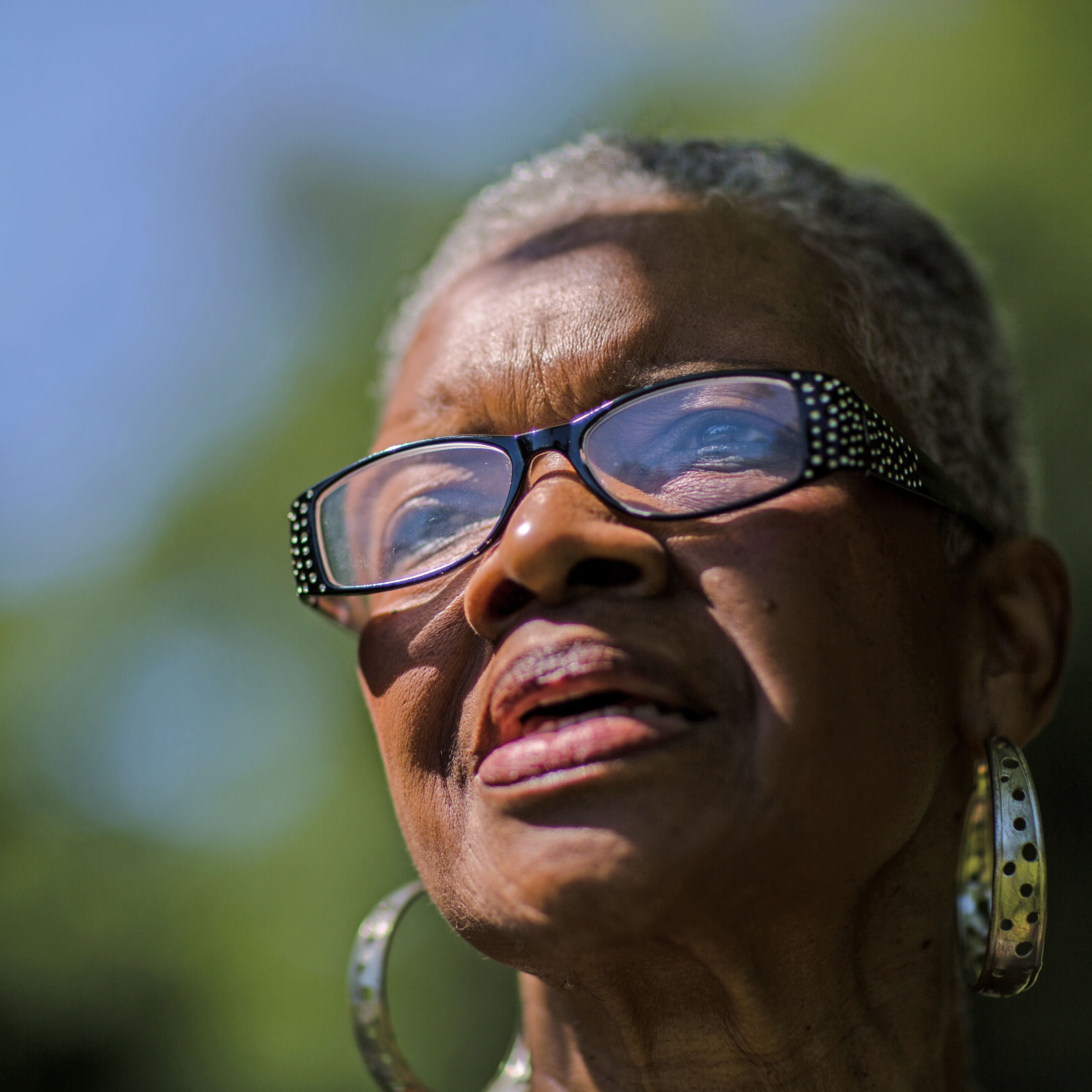
Berger pauses to explain the city’s racial history. Bedford Heights was founded in 1951, drawing white families with its affordable homes and good schools. In the ’70s, the racial composition began to change. Today, the city is 77 percent African American. “Those old-timers walking their dogs are not black folks, you understand?” he says. “Bedford Heights had no black folks! But little old white ladies can walk their little dogs down the street and don’t give much thought to being safe—they didn’t know they weren’t safe!” He ticks through the services the city provides its seniors, along with this sense of safety: “We mow their lawns, if they need us to. We shovel their walk when it snows. We have a shuttle to drive them to the pharmacy. We don’t allow people to park on their lawns or play loud music.” Trump’s ignorance, he maintains, has caused him to fundamentally misread black communities. “People aren’t trying to get out of Bedford Heights,” Berger exclaims. “They’re trying to get in!”
Although the Cleveland metro area has lost about 10,000 net jobs during Obama’s presidency, the 12th District has gained several major employers. Many were recruited there by Warrensville Heights Mayor Brad Sellers, who, after playing center for the Chicago Bulls alongside Michael Jordan in the late 1980s, returned to his hometown to become an economic development official and was elected mayor in 2011. “It was a tough piece down here in 2008, 2009,” Sellers recalls. Unemployment hit 18 percent. “With help from a lot of people, we stitched this thing back together.” As a professional basketball player, Sellers had dealt with plenty of corporate executives. He used this experience to help attract
The presidential election, Sellers gently explains, doesn’t occupy a great deal of mental space for most of the people in his community. Warrensville Heights is 98 percent African American and a lock for Clinton. “I don’t think I’ve ever seen a Trump sign here,” he says. Most people have a local focus, Sellers says, and share his sense that things are slowly getting better: “I see it on the tax rolls, I see it on the streets.” He encourages me, on my way out of town, to visit the new rec center and library, a soaring, glass-fronted LEED-certified cathedral that wouldn’t look out of place on the Stanford University campus.
Still, the sense of hope here is tempered by recent experience. “In a predominantly African American community, the coming of Barack Obama was unlike anything we’d seen,” Berger says. “Optimism. Hope. Pride. Belief that things are absolutely going to get better.” But that sense of imminent, life-shifting change eventually wore off. “Things didn’t change so much,” Berger says. Clinton, he suggests, represents a more realistic kind of hope.


Youngstown
An hour’s drive southeast of Cleveland, the political anger is often visible on the side of the road. From his 18th birthday through his retirement from
While Ziobert’s passion may be exceptional, his newfound allegiance to Trump is part of a broad trend that made Ohio’s 58th District, encompassing Youngstown and its suburbs, Trump’s deepest wellspring of support in the Republican primary. (John Kasich carried the state overall.) To the surprise of both parties in Mahoning County, a deep-blue, labor-friendly area of northeast Ohio that includes Youngstown, thousands of lifelong Democrats abandoned the party to register as Republicans and vote Trump. In the 2008 primary election, the county recorded 81,588 Democratic votes (86 percent) and just 13,234 Republican votes (14 percent). This year, Democrats won 36,887 votes (51 percent), Republicans 34,982 (49 percent). “It’s been a hell of an adventure,” says Mark Munroe, chairman of the Mahoning County Republican Party.
The first tremors came in February. “We were in the middle of moving to a new office and lost live phone service for a bit,” says Munroe, while greeting well-wishers at a GOP tent at the Canfield Fair in late August. “I’d dial in to check our voice mail every afternoon, and there’d be dozens of messages from Democrats asking how they could vote for Trump. That was my first clue that something was going on.” In April, 18 members of the Mahoning County Democratic Party’s precinct committee were fired for supporting Trump. The party chairman, David Betras, expressed disappointment but not surprise. “Am I shocked Democrats voted for Donald Trump? No,” he said at the time. “I’ll be the first to admit the Donald Trump message resonates in the Mahoning Valley.”
Trump’s seismic effect here, most people agree, stems from Youngstown’s steep economic decline across the last 40 years. While many southeast Cleveland neighborhoods experienced economic distress during that period, Youngstown, once an economic powerhouse, had further to fall. Most of the city’s steel mills shut down in the 1970s and ’80s, victims of foreign competition. As jobs left, so did much of the population. The psychology of decline—of greatness lost—has left many residents longing for a savior who will bring dramatic change. Trump’s campaign message often sounds as if it’s directed specifically at the 65,000 people who remain. “Nafta is less popular here than Osama bin Laden,” says Paul Sracic, a political scientist at Youngstown State University.


Trump’s eagerness to challenge conservative pro-free-trade dogma has not only drawn disaffected Democrats but also enlivened a new generation of Republicans who feel little connection to the national GOP’s agenda. Laurencia Canzonetta, 21, a Youngstown State senior from nearby Warren, says the school’s College Conservatives club, which she co-chairs, was practically dormant before Trump came along. “He’s ruffled feathers in the GOP, which people around here like to see,” she says. “Those at the top shouldn’t be the only ones who have a say.” Canzonetta’s group recast itself as Students for Trump. Not only did this draw new members, she says, as the group prepared to rally at that night’s football game, but it also lowered the inhibitions preventing many college Republicans from speaking out. “Students get in this mindset of political correctness, even if they’re conservative,” she laments. “I’ve seen how Trump has changed that.”
Canzonetta’s grandfather worked the furnaces of Republic Steel and, she says, told her that he supports Trump “because I want to give your generation the future it deserves.” It won’t revolve around steel. But whatever the engine may be, the notion of restoring “greatness” to an area beaten down by global economic forces is a key source of Trump’s appeal, and not only among former factory workers. “I’ve talked to plenty of professionals around here—accountants, doctors, lawyers—who will quietly tell you they like Trump,” says Sracic. “I think they like his attitude. Trump is a Youngstown type of guy.”
In Mahoning Valley, presidential politics is also about values. As the breakfast shift winds down at the Golden Dawn Restaurant in Youngstown, Pat Prokop, 38, an 18-year veteran of Ironworkers Local 207, ambles in to begin his day off with a Wild Turkey and a beer. Prokop is another lifelong Democrat planning to vote for Trump. His situation is fine: Work is steady, he says, showing off pictures from a recent two-week vacation in Maine. His support for Trump derives from his sense that the American work ethic is failing and that Trump is best suited to turn it around: “He’s honest and tough.”
In the past, Prokop says, Local 207 would routinely have 400 people sign up for its free ironworker training, 40 of whom might eventually earn certification. “Today,” he says, “we get maybe 200, and a lot of them don’t show up or can’t pass a drug test. We’re lucky to end up with 20 [graduates].” He thinks Trump would jolt people back to life and help them reenter the local economy.
In Youngstown, things have actually been getting a bit better. Unemployment, which peaked at 17 percent in 2008, is now below 8 percent. For many people here, Trump is the one who can bring them all the way back.
As the TV near the bar shows footage of Trump meeting with Mexican President Enrique Peña Nieto, Prokop says he believes that Trump’s outrageous statements about banning and deporting Mexicans are done mainly for effect and mask his true intentions. “He’s gonna rake all the good people out of Mexico and bring them in here,” Prokop says, a prospect he views as a benefit, not a threat. “Latinos,” he explains, “are fabulous, fabulous workers.”