Air Pollution
Why this number
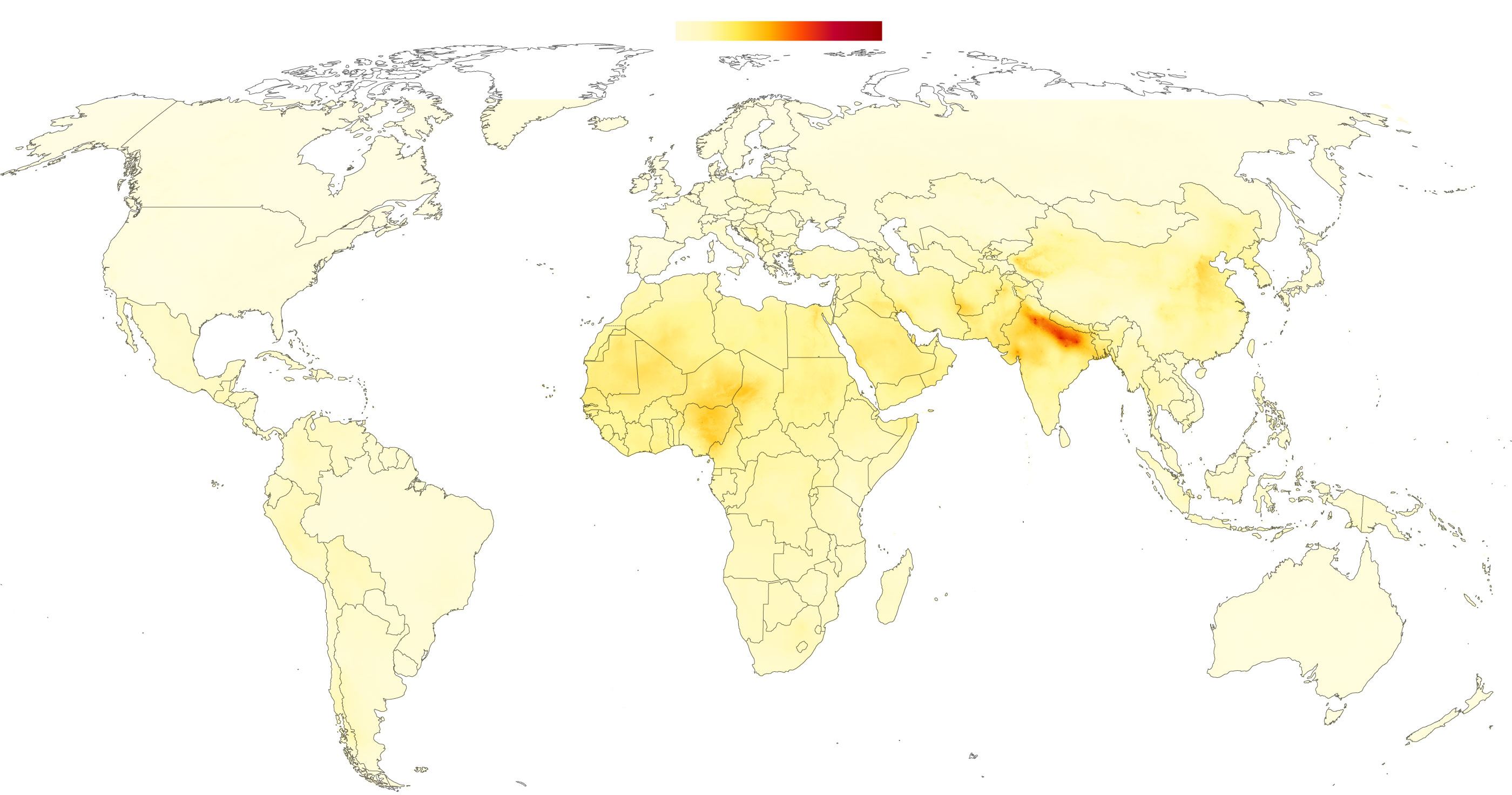
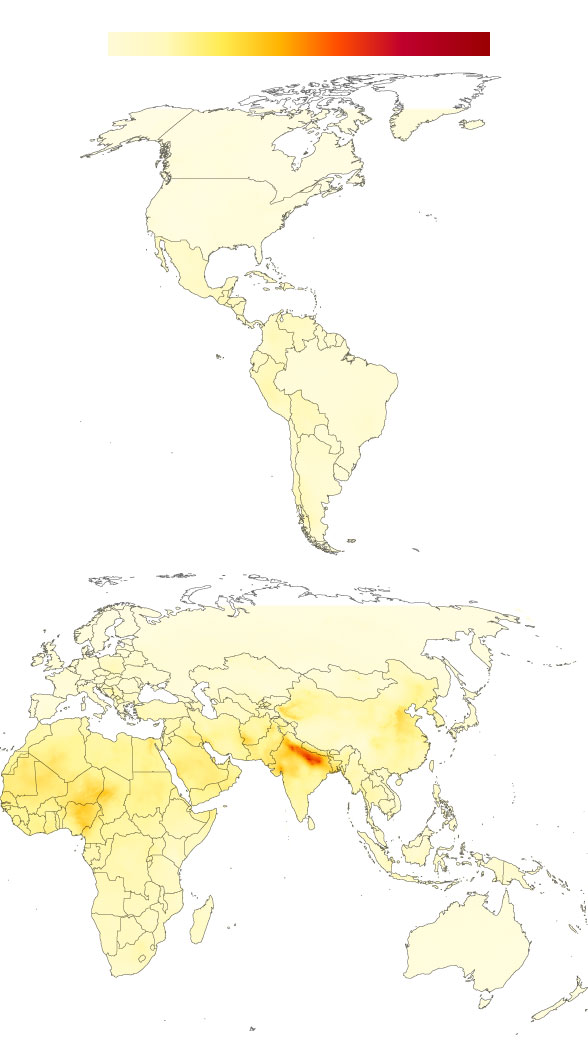
Air pollution kills an estimated 7 million people every year. Tiny soot and dust particles found in city air and biomass-fueled kitchens are the main culprits. Scientists call it PM2.5, meaning particulate matter smaller than 2.5 millionths of a meter. Bloomberg Green pulls data from more than 4,000 sensors monitoring PM2.5 in an open-source network run by OpenAQ, a nonprofit based in Washington, D.C.
Inside the metric
Particulate matter is in some ways the most intimate of the climate pollutants. It’s the result of activities people do every day. PM2.5 is made up of soot from vehicles, smoke and ash from wildfires, biomass cook-stove pollution—plus sulfate aerosols from power generation and desert dust. We breathe it in, particularly those of us living in cities and households in developing nations. No amount is safe, and exposure over time increases susceptibility to cardiovascular and respiratory illnesses. Scientists and public-health officials are much less concerned about daily levels, in which weather plays an outsize role, than they are about chronic exposure.
The chemical diversity of PM2.5 makes it hard to describe a single effect on the climate. One significant impact comes from black carbon, a sooty material caused by burning fossil fuel, which can settle on glaciers and attract solar radiation that would otherwise be reflected back into space. Black carbon at different altitudes can protect clouds, providing a cooling effect, or interfere with cloud formation, a warming effect. Another component of PM2.5, aerosols, has a cooling effect on temperature.
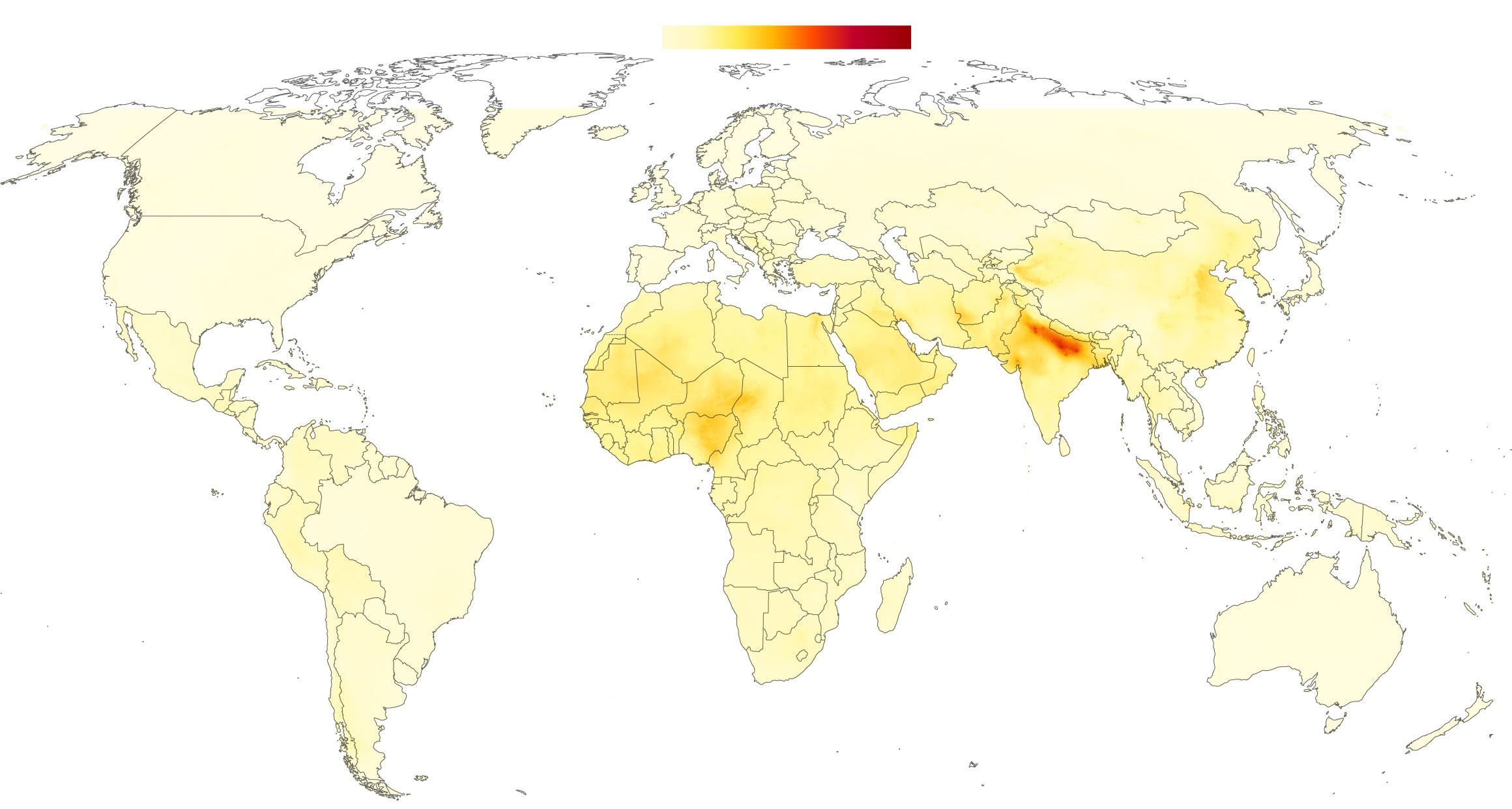
Annual average air pollution, 2019
Annual average PM2.5
0
250
Annual average PM2.5
0
250

Annual average PM2.5
0
250
Annual average PM2.5
0
250
Annual average PM2.5
0
250
Annual average PM2.5
0
250
Western
hemisphere
Eastern
hemisphere
How we know
Many big cities monitor PM2.5 continuously, but the coverage is uneven within population centers and some of the most-polluted cities have few sensors. Oslo, Norway, is home to at least 12 such monitors in the OpenAQ database, while Lahore, Pakistan—which is 12 times larger—has only one sensor. This means there are nowhere near enough sensors to measure the air quality of the vast majority of the 7.6 billion people on the planet.
What progress looks like
Cleaner air has been a clear success for environmental policy. Public-health researchers long ago documented the link between PM2.5 and mortality, and policymakers have since come up with effective laws that reduce save lives. That means PM2.5 readings—and the number of people living with substandard air quality—can drop more rapidly than almost any other metric on this dashboard.
From 2000 to 2018, for example, PM2.5 pollution in the U.S. fell by almost 40%, to 8 micrograms per cubic meter, after the implementation of revised national air-quality standards. China has required people in heavily polluted areas to switch away from coal- to gas-fired power and declared low-pollution zones around major cities. India faces the most daunting current challenge, driven by coal power, urban transportation and farming practices that involve massive annual fires. Indian cities accounted for the entire top 10 list of most polluted in 2016, according to World Health Organization data. The good news is that cleaner technologies and better policies can rapidly sweep away air-quality problems.