Bloomberg Intelligence
This analysis is by Bloomberg Intelligence Senior Analyst John Davies. It appeared first on the Bloomberg Terminal.
South Africa’s May 29 elections, against a backdrop of power shortages and higher-than-expected inflation, elevate uncertainty for the country according to our quarterly research round up. Inflation could remain above the midpoint of the central bank’s 3-6% target range for a couple of quarters, likely meaning a policy rate cut from 8.25% will be delayed from this year, as expected in 1Q. The rand has been relatively strong vs. peers, heightening risk if the ANC loses its majority at the election.
Banks face modest EPS downgrades with rising impairments the biggest threat. Weak platinum group-metal prices spell further trouble for South African miners. Plans to end voice-termination imbalances in telecom from 2025 might reduce the already modest threat posed by smaller rivals.
Inflation’s fleeting fall delays South Africa’s rate cut
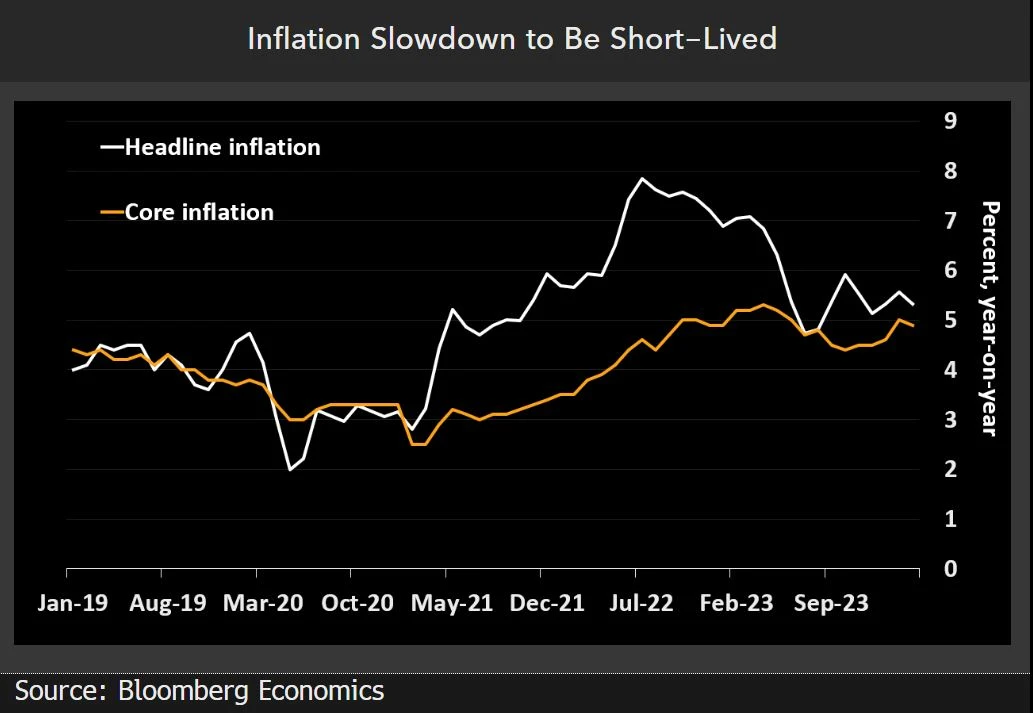
South Africa’s smaller price gains in March are likely to be short-lived. Annual inflation – which fell to 5.3%, from 5.6% in February – is set to pick up in the second quarter, partly driven by stronger energy prices. Price gains, meanwhile, are expected to remain sticky until year end, holding above the midpoint of the South African Reserve Bank’s 3%-6% target, where it would like to see inflation anchored. This will probably delay rate cuts until 2025.
Modest food price gains are tempering upward pressure from fuel prices. Food prices ticked up 0.1% month on month in March. Fuel price gains increased to 5.3% month on month from 3%, though a high base effect moderated the impact on the annual rate. Looking ahead, annual inflation will pick up in 2Q and stagnate around 5.5% until end-2024.
Strong inflation to keep SARB rate cut at bay until 2025
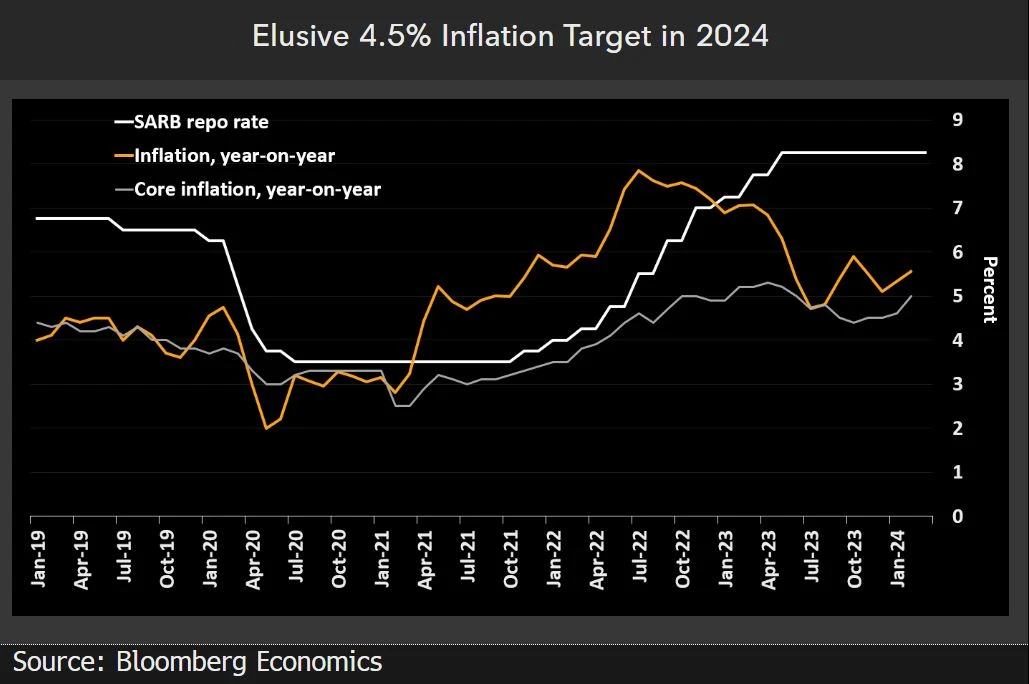
The South Africa Reserve Bank will maintain its restrictive policy stance well into 2025. The Fed’s hawkish pivot has not changed our rates outlook. It affirms our non-consensus high-rates-for-longer view. Reducing the inflation rate – currently at 5.6% – to the mid-point of the SARB’s 3%-6% target is taking longer than anticipated.
The central bank held at 8.25% for a fifth consecutive policy meeting in March and adopted a more hawkish tone. For now, headline inflation remains closer to the upper band of the SARB target than the mid-point. Governor Lesetja Kganyago expects inflation to reach the 4.5% mid-point of the target by the end of 2025. Click the Text tab for the full report.
Reforms, renewables power brighter outlook in South Africa
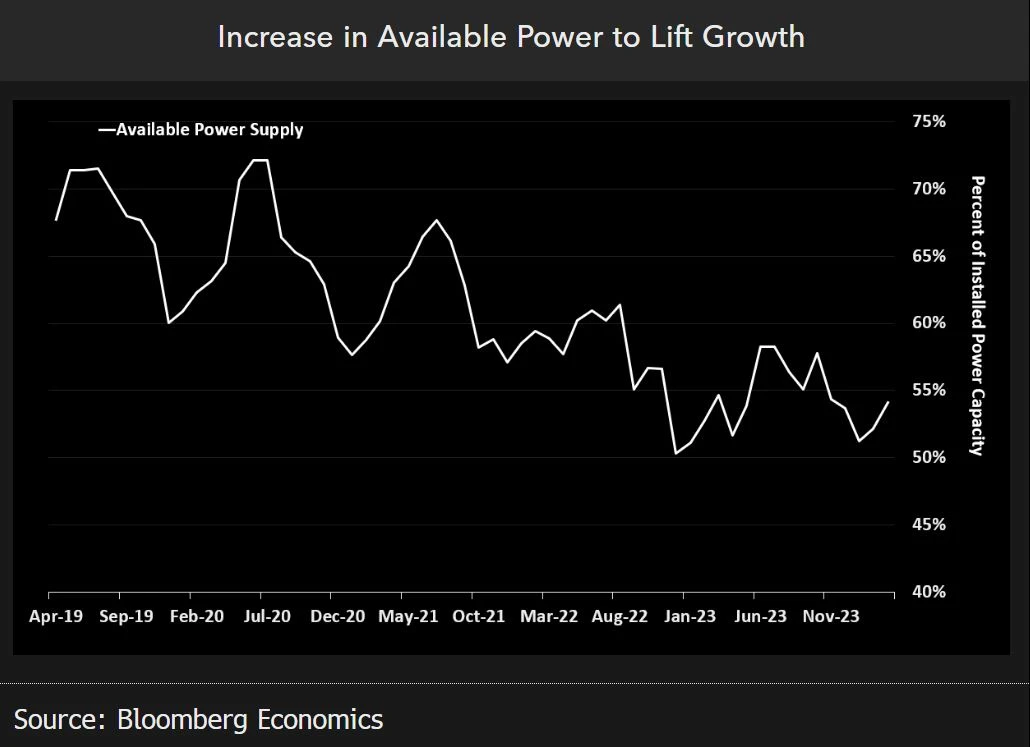
South Africa’s prospects will improve modestly in the coming years. Growth will likely pick up to 1.0-1.5% from 0.7% in 2023, but fall short of the long term average of 2%. A more-stable electricity supply, reforms in the logistics sector and lower interest rates will be behind the upturn. We expect years of disruptive power outages to decline from 2025 as renewable power comes on line and the ongoing maintenance of coal-power station begins to bear fruit.
An overhaul of the leadership at the state-owned logistics operator, Transnet, will help ease bottlenecks. On the supply side, manufacturing and mining should see the biggest pick up in activity, as they are energy and logistics intensive. On the demand front, consumption will pick up as lower rates ease credit conditions, and real incomes improve.