This analysis is by Bloomberg Intelligence Director of Market Structure Research Larry R. Tabb and Bloomberg Intelligence Senior Associate Analyst Jackson Gutenplan. It appeared first on the Bloomberg Terminal.
Four New SEC Proposals Would Completely Remake Equity Markets
Four sweeping SEC proposals to reduce tick sizes and access fees, and create an odd-lot best bid/offer; force marketable retail orders into competitive auctions; adopt a cross-asset class best-execution rule; and create execution quality disclosures for retail brokers would aid exchanges and hurt retail brokers if passed intact. The outlook for wholesalers is mixed, even though they’re a target. Retail investors trading liquid products will be aided, while others could get hurt. All the changes, except that governing disclosure of execution quality, likely face court challenges.
SEC auction proposal aims to help retail, but exchanges win big
The SEC’s order competition proposal is likely to benefit large exchanges and many retail investors while putting a squeeze on wholesalers and those brokers that accept payment for order flow. The commission intends to promote order-by-order competition by mandating retail orders be exposed to exchange-based open auctions. Exceptions apply for midpoint price improvement, but we’re concerned about the potential for higher costs when auctions fail for low-liquidity symbols. The SEC is attempting to reduce market fragmentation, disintermediate wholesale market makers and aid price improvement, though we think its calculations may be optimistic on that last point.
Retail has low trading cost, SEC wants it lower
The SEC’s motivation for the new rule is to slim retail traders’ transaction costs by exposing their marketable orders to auctions. The SEC estimates individuals can save 0.86-1.21 bps per trade that otherwise would have been internalized by wholesalers. However, we believe the SEC estimate of $1.12-$2.35 billion a year in additional price improvement is optimistic and could be negated by any re-imposition of commission fees charged to individuals.
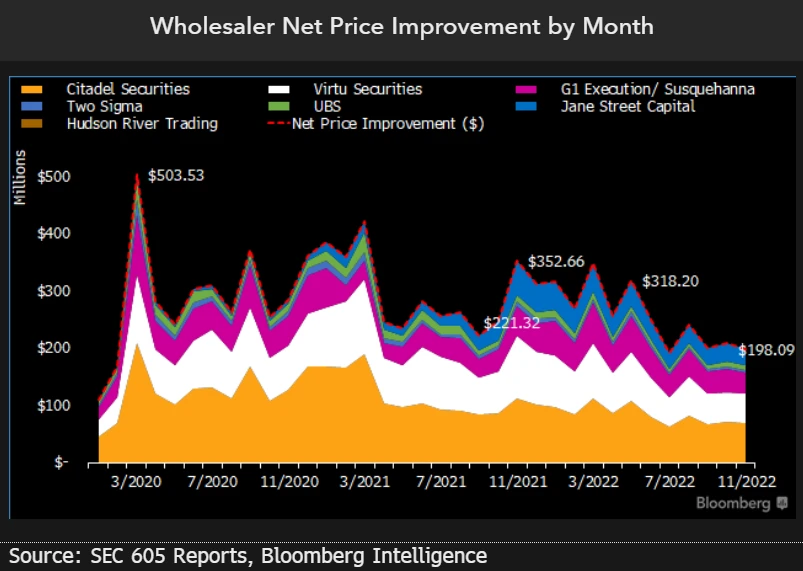
In the current structure, retail investors pay zero commissions and wholesalers execute the majority of orders internally at tighter spreads than the national best bid and offer (NBBO). The difference between the executed price and the NBBO is a benefit to the retail investor known as price improvement, and it totaled an estimated $3.05 billion among seven wholesalers in 2022.
Auctions don’t always equal execution
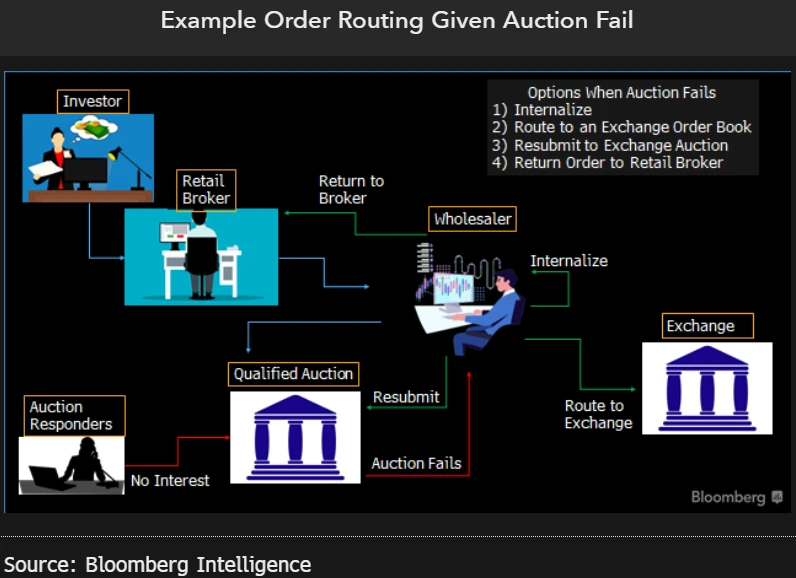
Routing a marketable retail order to a qualified auction crucially doesn’t guarantee execution in the SEC’s proposal. Once the notice of auction message is disseminated, if the trade receives no responses in 100-300 milliseconds, the broker-dealer that routed the order retains best-execution responsibilities for the retail transaction. At this point, a wholesaler can choose to internalize the order against its own risk book, or the broker can route directly to a wholesaler. Alternatively, they can sweep an exchange order book, return the order to the retail broker or resubmit to an auction.
Orders failing to execute at auction not only curtail execution quality but also introduce implicit opportunity costs as time passes, prices move and orders go unfilled.
1% ADV threshold leaves auctions to big incumbents
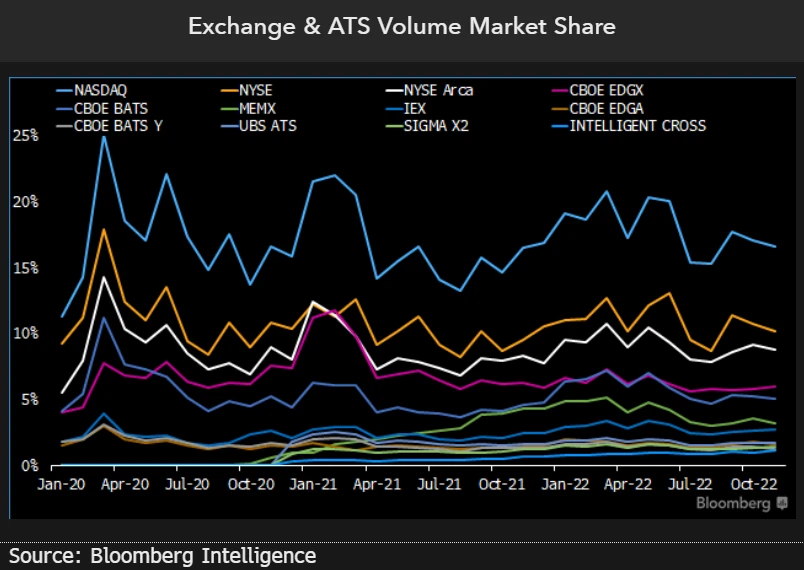
The order competition proposal requires any open-competition trading center to command at least 1% of total NMS stock average daily volume (ADV) to operate an auction in a bid to ensure each has sufficient competition and a range of participants. Only nine exchanges and three ATSs met this threshold in four of the past six months, effectively shrinking the field of eligible market centers. Also, new entrants will be blocked from trying to capitalize on retail trading.
Many market participants will laud the lower market fragmentation, as it can simplify finding liquidity. This specification increases concentration, with the largest exchanges benefiting from retail volume moving from off- to on-exchange.