ARTICLE
The new architecture of wealth: Hong Kong’s institutional pivot

Bloomberg Professional Services
Hong Kong is entering a new phase as a family office hub, defined by its role as a destination for global ultra-high-net-worth capital. The city is now home to more than 2,700 single-family offices, with growth accelerating as policymakers reinforce Hong Kong’s position through tax concessions and dedicated initiatives. In 2025 alone, over 200 new family offices were added, allowing the city to meet its target ahead of schedule and paving the way for the “Family Office 2.0” initiative.
A Diversifying Capital Profile
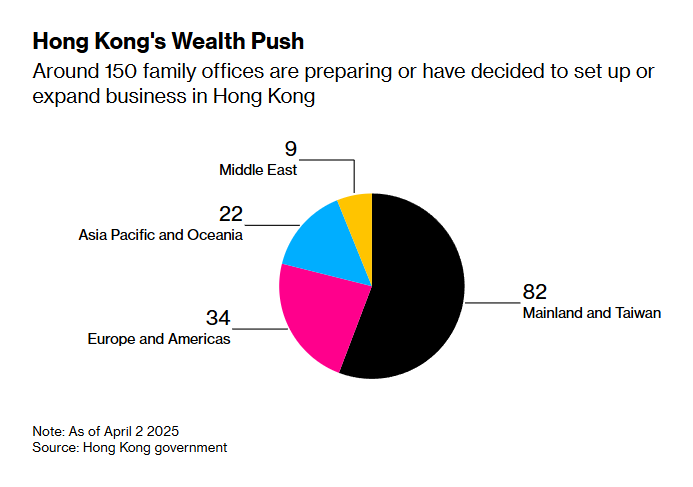
What distinguishes this latest chapter is the changing profile of incoming capital. While the ecosystem has long been anchored in Chinese and Greater China wealth, it is increasingly attracting interest from Europe and the Middle East. Government data from April 2025 showed that of roughly 150 family offices preparing to establish or expand operations, almost a third (29%) originated from Europe, the Americas, and the Middle East.
The Drive Toward Institutionalization
Global family offices often arrive with institutional expectations around governance, portfolio construction, and risk management. Hong Kong’s modern family office is now defined by a high degree of institutionalization:
- Governance: Offices typically feature formal boards, dedicated investment committees, and clearly articulated mandates.
- Professionalization: Decision-making authority is increasingly delegated to professional CIOs supported by rigorous research rather than ad hoc family decisions.
- Risk Management: Institutional-grade monitoring, scenario analysis, and consistent performance reporting have become baseline requirements.
Strategic Market Depth
The city’s appeal reflects a convergence of diversification needs and Asia’s growing share of global growth. Hong Kong remains one of the world’s most liquid financial hubs, supported by deep equity and bond markets and the presence of more than 70 of the world’s top 100 banks. For family offices building diversified portfolios across public markets, private capital, and alternatives, this breadth of market access is a practical advantage.
Navigating Complexity
This evolution challenges private banks and advisors to adapt. For modern family offices operating across multi-asset, multi-custody portfolios, investment decisions are inseparable from global market dynamics and regulatory frameworks. Infrastructure designed to support decision-making across markets and jurisdictions—such as that provided by Bloomberg—is becoming foundational to these professionalized advisory workflows.