Five Maps That Show Why Macron Beat Le Pen
As the polls predicted, independent candidate Emmanuel Macron was elected France's next president by double-digit margins on Sunday, even as a defeated Marine Le Pen earned a record vote for her far-right National Front party. This result marks the end of one of the most surprising and polarizing elections in modern French history, and the first time ever that two outside candidates vied for the country's highest office.
Local Power
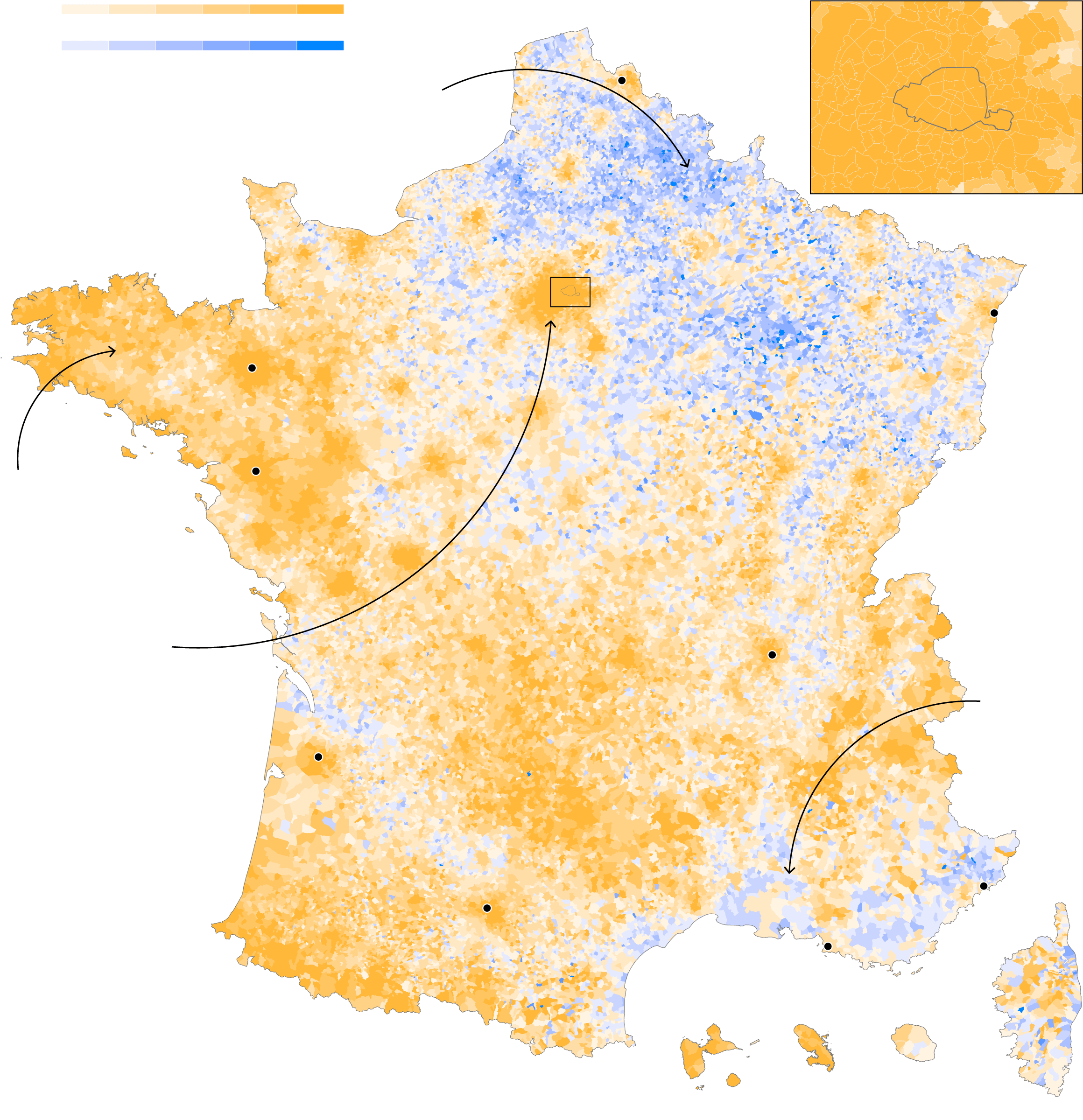
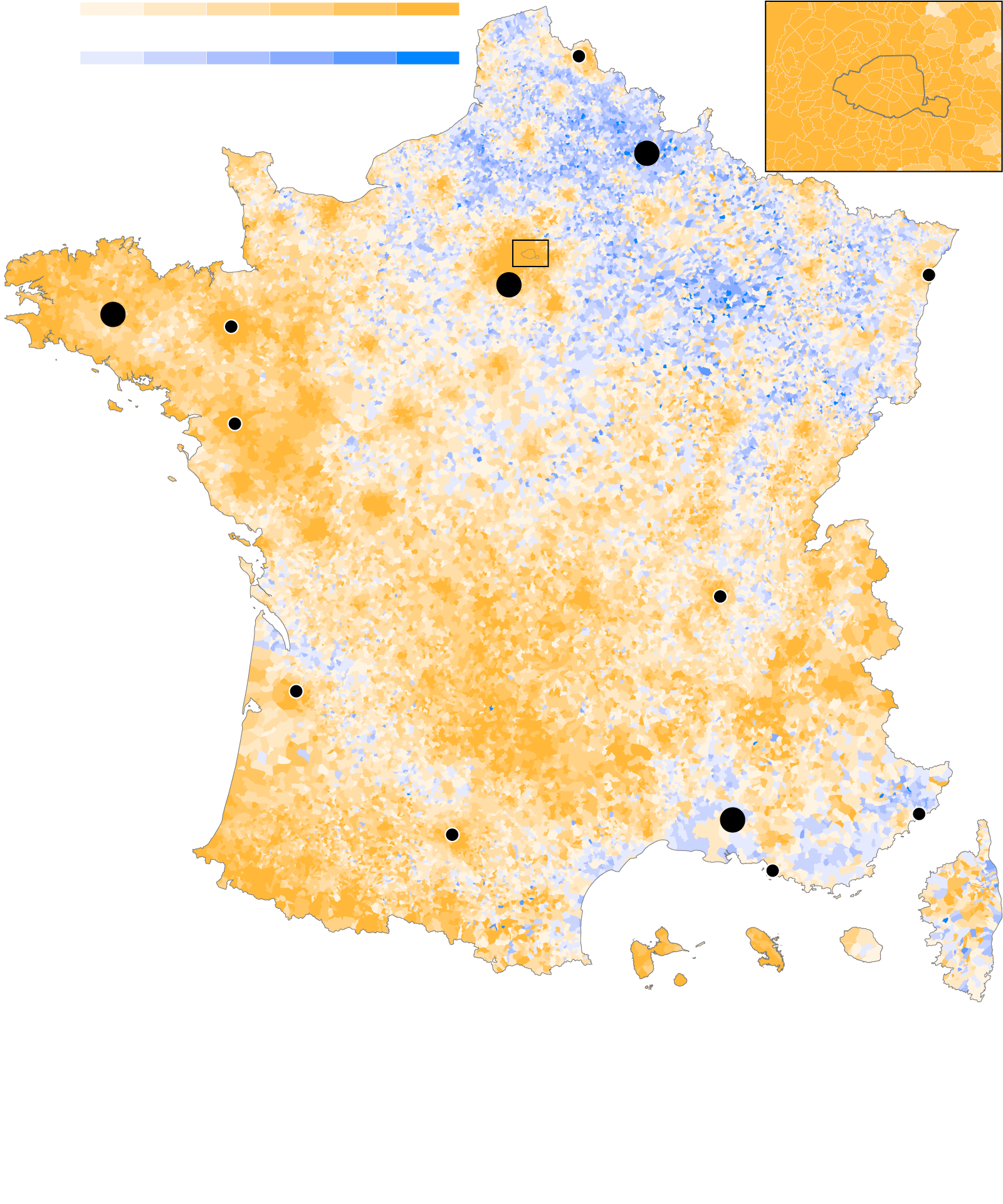
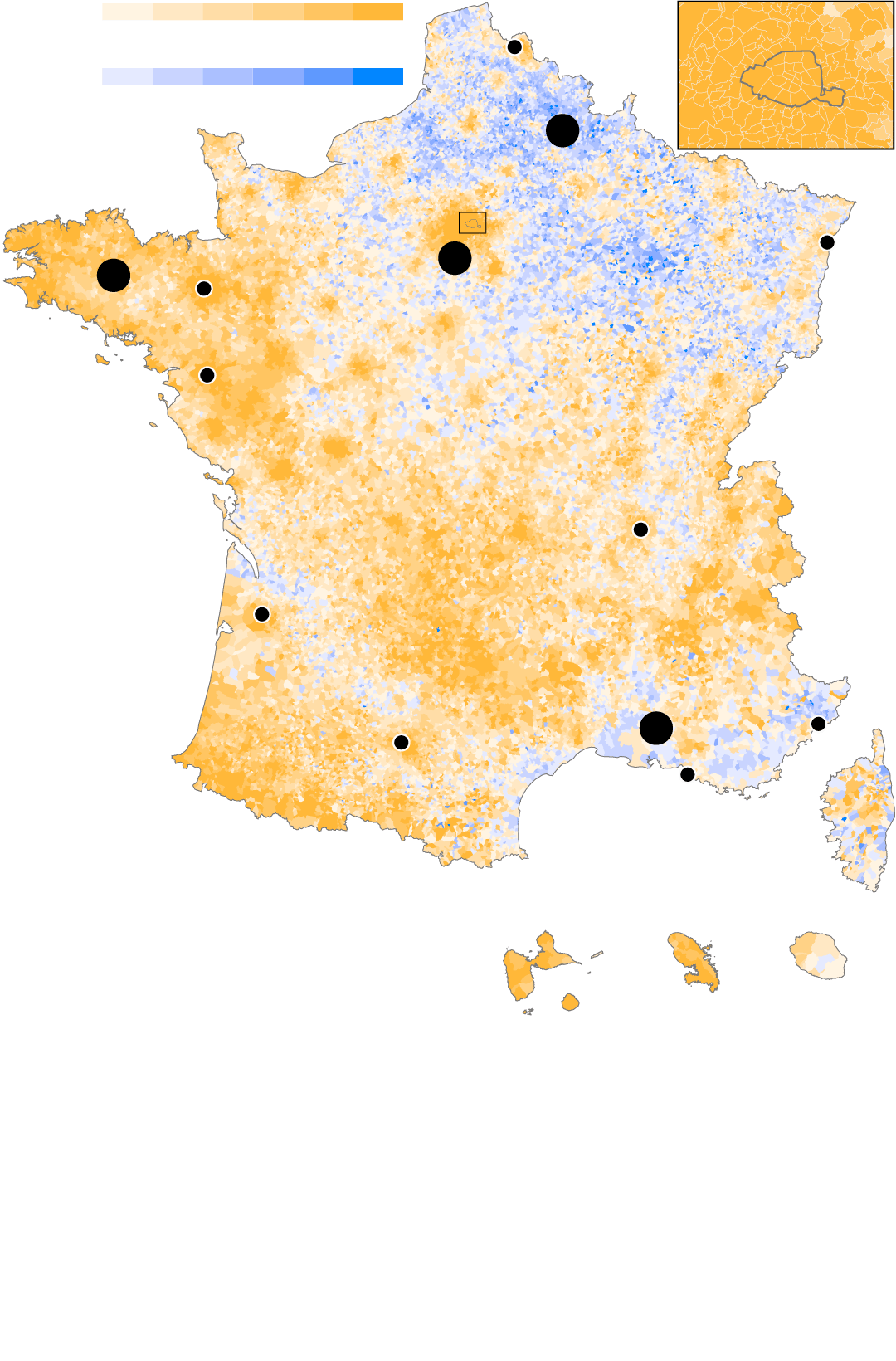
Macron carried all but two of the country's 96 mainland departments, including Corsica, plus all of its overseas departments and territories. Drilling down to the more local level, where Le Pen won roughly a quarter of France’s more than 36,000 communes, shows that her candidacy did have widespread support throughout the country. And while not enough to get her to the Elysee Palace, the 10.6 million ballots cast for Le Pen represent nearly double the votes won in the 2002 second-round election by her father, former National Front leader Jean-Marie Le Pen.
Macron
Paris
margin
+10%
20
30
40
50
Le Pen
Lille
Aisne was one of just two departments that Le Pen won, both in France’s equivalent of the Rust Belt, and has the country’s third-highest unemployment rate at 13.7%
Paris
Strasbourg
Rennes
Nantes
Macron won more than three in four votes in parts of Brittany, the region that backed him most strongly in the first round election
Le Pen came within seven points of winning the Vaucluse department, part of which her niece represents in the National Assembly
In the so-called Grande Couronne encompassing Paris and its suburbs, Macron won by nearly 2.8 million votes, more than a quarter of his victory margin
Lyon
Bordeaux
Nice
Toulouse
Marseille
Corsica
Martinique
Guadeloupe
Reunion
Macron
Paris
margin
+10%
20
30
40
50
Le Pen
Lille
1
Paris
3
Strasbourg
2
Rennes
Nantes
Lyon
Bordeaux
Nice
4
Toulouse
Marseille
Corsica
Guadeloupe
Martinique
Reunion
1. Aisne was one of just two departments that Le Pen won, both in France’s equivalent of the Rust Belt, and has the country’s third-highest unemployment rate at 13.7%
2. Macron won more than three in four votes in parts of Brittany, the region that backed him most strongly in the first round election
3. In the so-called Grande Couronne encompassing Paris and its suburbs, Macron won by nearly 2.8 million votes, more than a quarter of his victory margin
4. Le Pen came within seven points of winning the Vaucluse department, part of which her niece represents in the National Assembly
Macron
Paris
margin
+10%
20
30
40
50
Lille
Le Pen
1
Paris
3
Strasbourg
2
Rennes
Nantes
Lyon
Bordeaux
4
Nice
Toulouse
Marseille
Corsica
Guadeloupe
Martinique
Reunion
1. Aisne was one of just two departments that Le Pen won, both in France’s equivalent of the Rust Belt, and has the country’s third-highest unemployment rate at 13.7%
2. Macron won more than three in four votes in parts of Brittany, the region that backed him most strongly in the first round election
3. In the so-called Grande Couronne encompassing Paris and its suburbs, Macron won by nearly 2.8 million votes, more than a quarter of his victory margin
4. Le Pen came within seven points of winning the Vaucluse department, part of which her niece represents in the National Assembly

Macron
margin
+10%
20
30
40
50
Le Pen
Lille
1
Paris
Strasbourg
3
2
Rennes
Nantes
Lyon
Bordeaux
Nice
Toulouse
4
Marseille
Corsica
Paris
Guadeloupe
Martinique
Reunion
1. Aisne was one of just two departments that Le Pen won, both in France’s equivalent of the Rust Belt, and has the country’s third-highest unemployment rate at 13.7%
2. Macron won more than three in four votes in parts of Brittany, the region that backed him most strongly in the first round election
3. In the so-called Grande Couronne encompassing Paris and its suburbs, Macron won by nearly 2.8 million votes, more than a quarter of his victory margin
4. Le Pen came within seven points of winning the Vaucluse department, part of which her niece represents in the National Assembly
As lopsided as Sunday's second-round result was, it still reveals a starkly divided country. Urban versus rural. White-collar versus blue-collar. Working versus unemployed. With the French people heading back to the polls next month to elect a new National Assembly, the balance of power will likely depend on how On the Move! (Macron’s independent party), the National Front and the mainstream parties leverage the socioeconomic forces illustrated in the these maps.
Le Pen’s Rust Belt Base
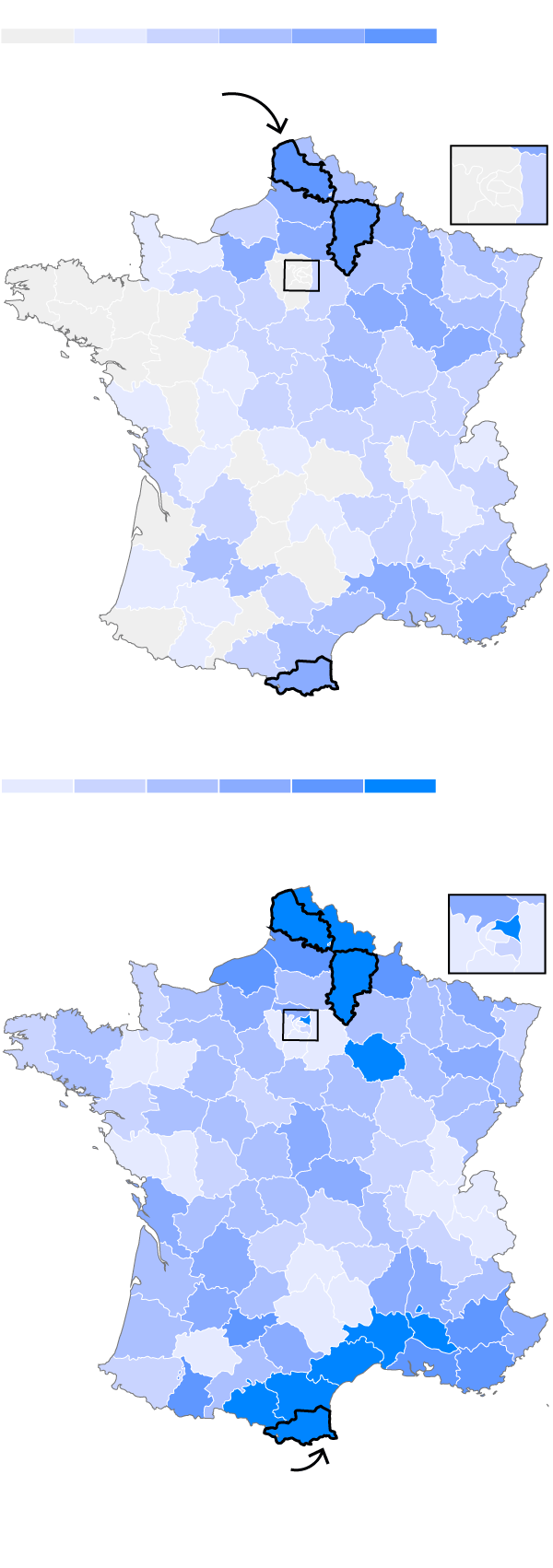
As in the first round, Le Pen's appeal was strongest in the National Front's usual redoubts in the industrial north and older, more conservative southeast. Both are areas where deindustrialization and globalization have led to stubbornly high unemployment, and lots of anti-establishment feelings.
Le Pen’s share of vote in the second round
30%
35
40
45
50
These were the only two departments that Le Pen won, both among 10 most unemployed
Paris
Region
Unemployment
8%
9
10
11
12
Paris
Region
Despite having the highest jobless rate (15.3%) in the country, Macron came out on top here, but by less than six points
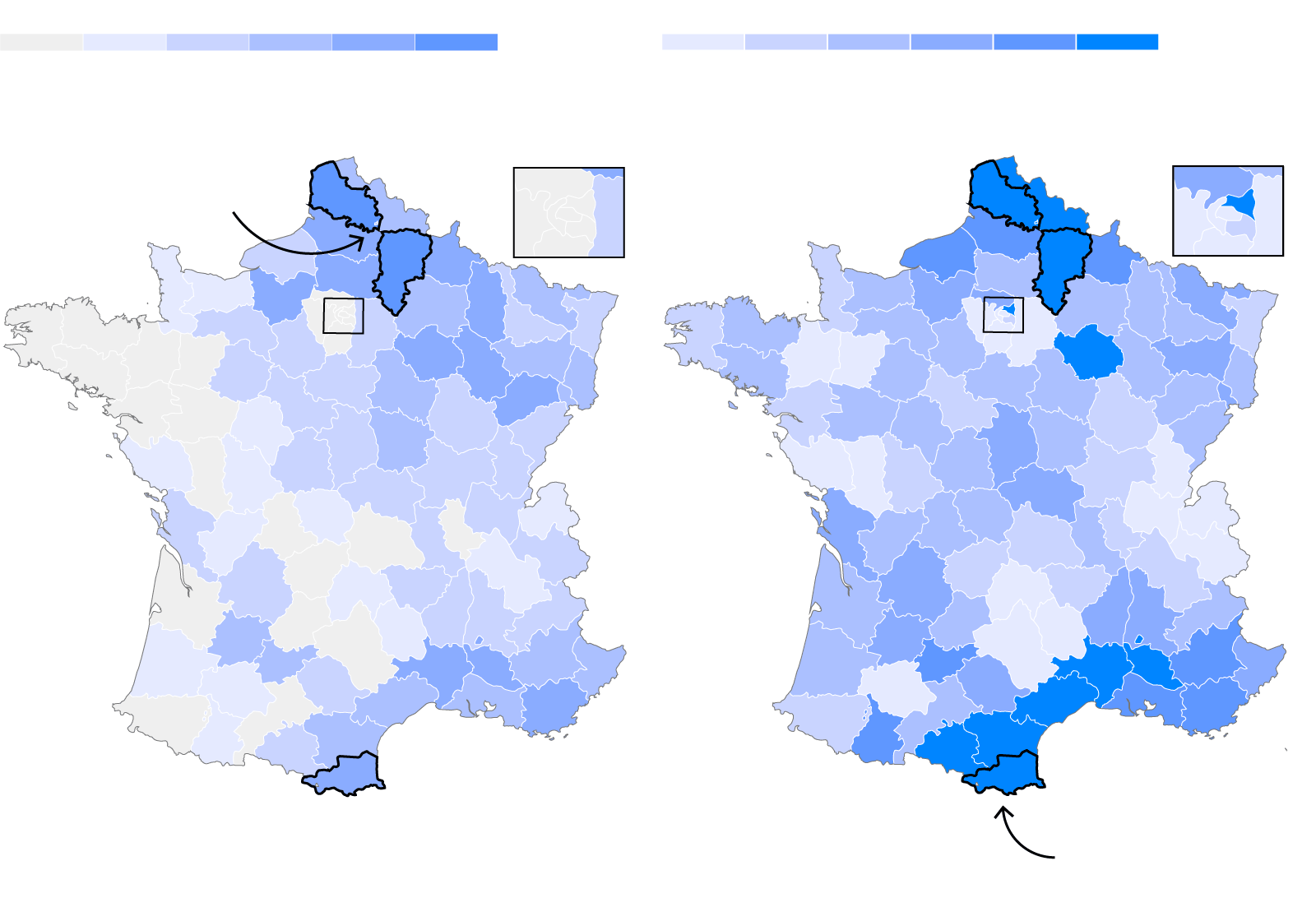
Unemployment
Le Pen’s share of vote in the second round
8%
9
10
11
12
30%
35
40
45
50
These were the only two departments that Le Pen won, both among 10 most unemployed
Paris Region
Paris Region
Despite having the highest jobless rate (15.3%) in the country, Macron came out on top here, but by less than six points
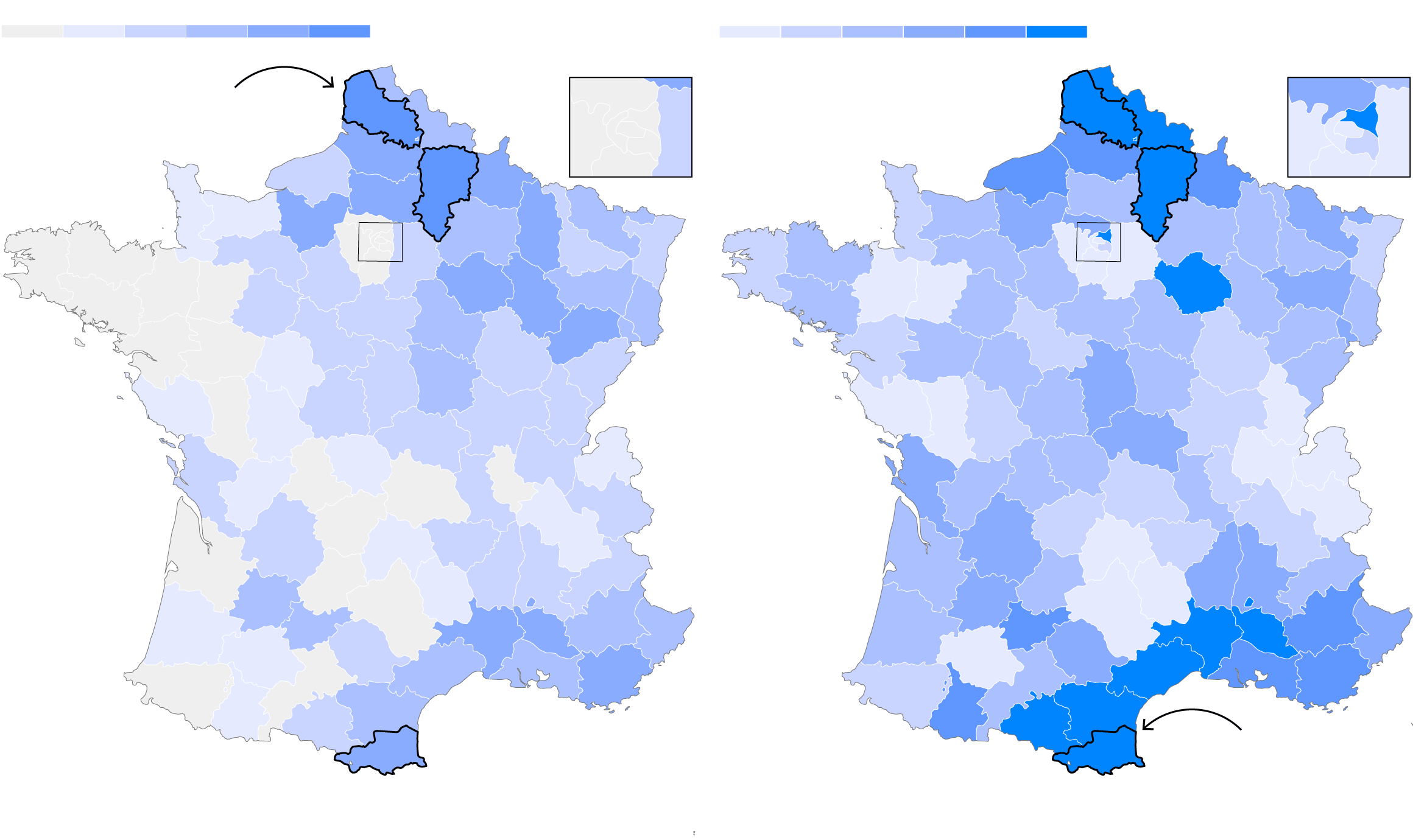
Le Pen’s share of vote in the second round
Unemployment
30%
35
40
45
50
8%
9
10
11
12
Paris Region
Paris Region
These were the only two departments that Le Pen won, both among 10 most unemployed
Despite having the highest jobless rate (15.3%) in the country, Macron came out on top here, but by less than six points
Macron’s Urban Elite Firewall
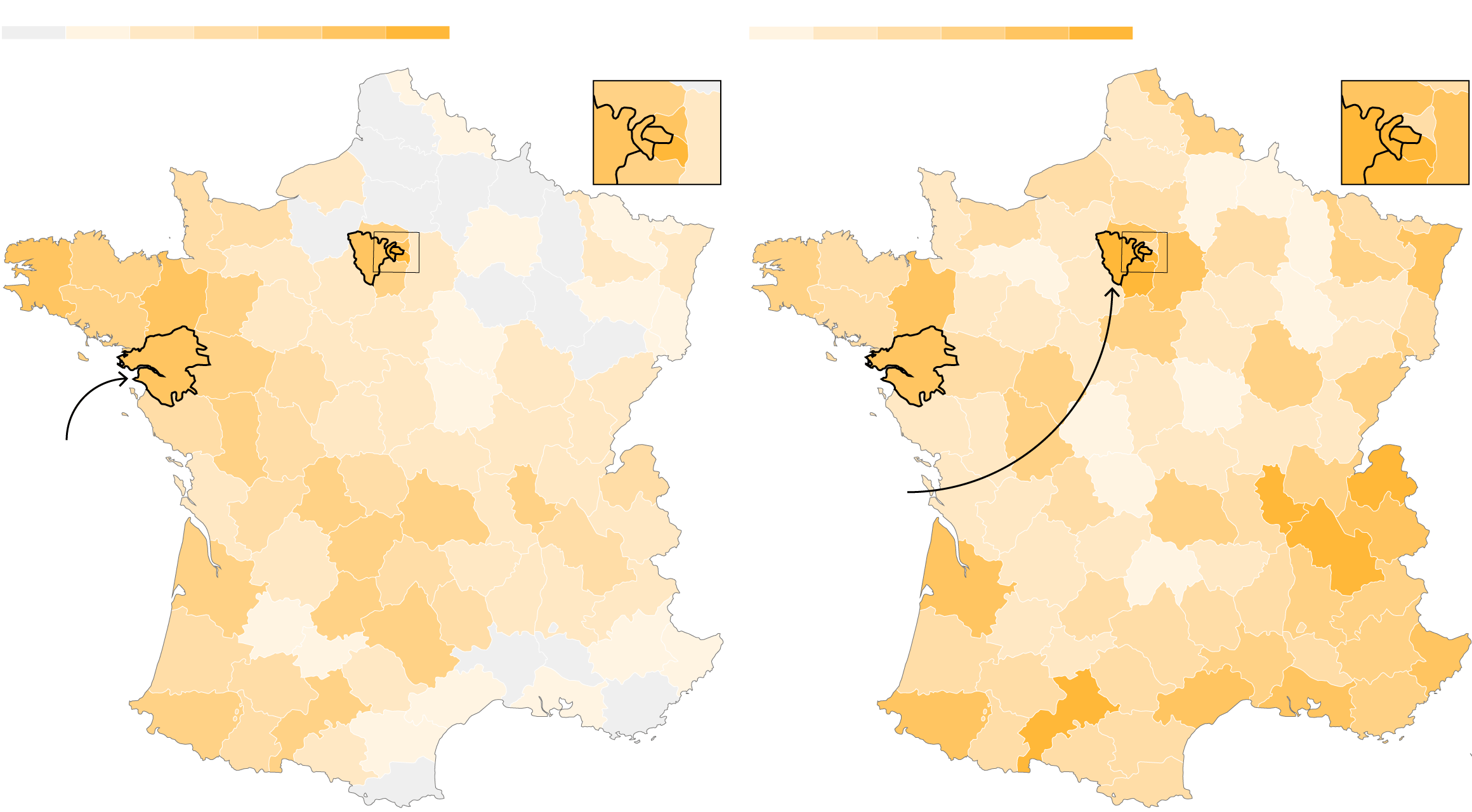
France’s major cities, with their highly educated and relatively well-off workforces, proved once again to be an insurmountable source of votes for Macron. Just in Paris proper he won by over 750,000 votes, while amassing a 367,000-vote margin in the Rhône department (home to Lyon) and a 141,000-vote edge in Bouches-du-Rhône, which includes Marseille and which went for Le Pen in the first round.
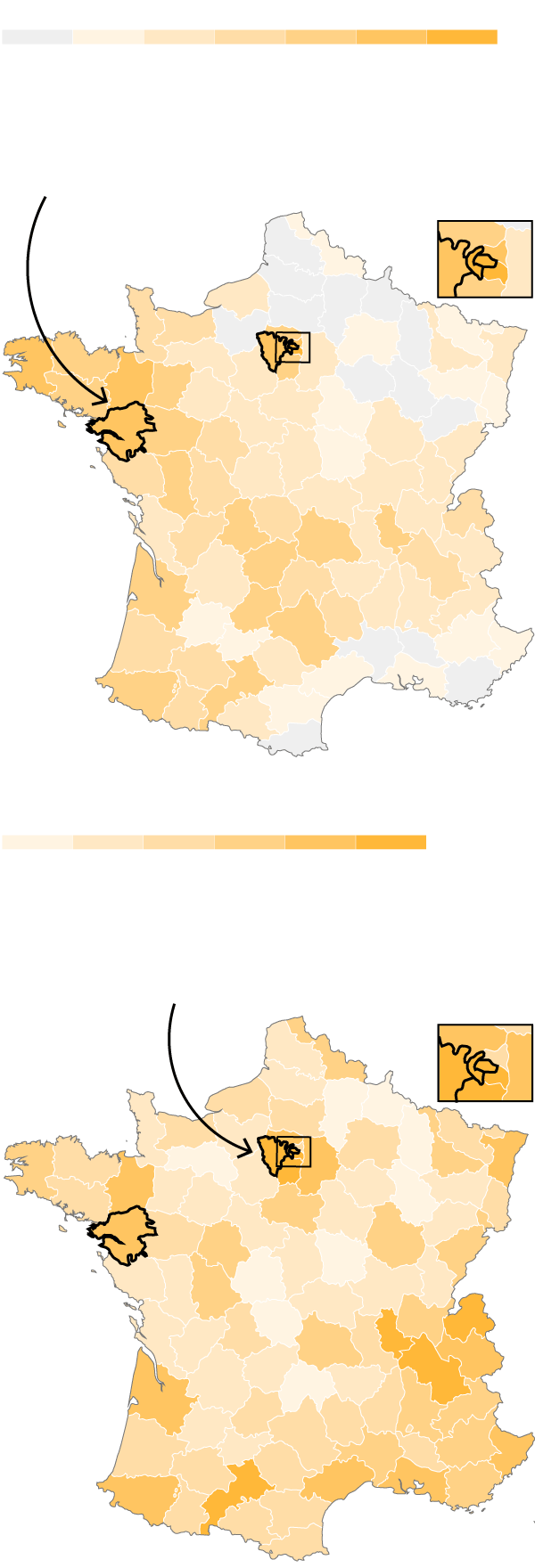
Macron share of vote in the second round
55%
60
65
70
75
80
The Nantes area, another concentration of advanced-degree holders, went for Macron by a 373,000-plus vote margin
Paris
Region
Voters with higher education degrees
18%
21
24
27
30
In the three most highly-educated departments in France, Macron won between 77 and 90 percent of the vote
Paris
Region
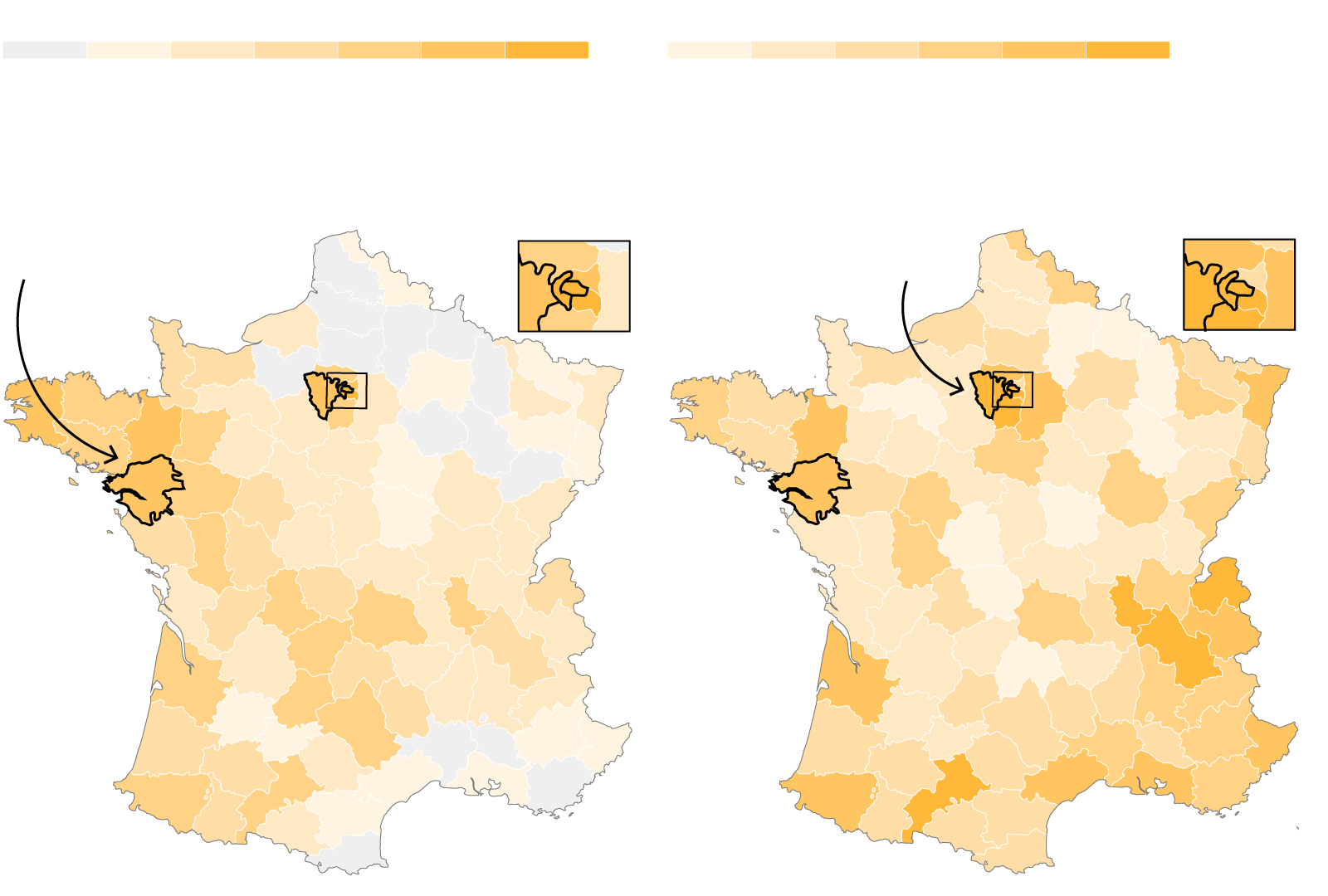
Macron share of vote in the second round
Voters with higher education degrees
55%
60
65
70
75
80
18%
21
24
27
30
The Nantes area, another concentration of advanced-degree holders, went for Macron by a 373,000-plus vote margin
In the three most highly-educated departments in France, Macron won between 77 and 90 percent of the vote
Paris Region
Paris Region
Macron share of vote in the second round
Voters with higher education degrees
55%
60
65
70
75
80
18%
21
24
28
30
Paris Region
Paris Region
In the three most highly-educated departments in France, Macron won between 77 and 90 percent of the vote
The Nantes area, another concentration of advanced-degree holders, went for Macron by a 373,000-plus vote margin