Education
How Did I Get Here?
Brooke Johnson
President, Food Network and Cooking Channel

-
-
Louisville Catholic Girls High School, Woodland Hills, Calif., class of 1969
-
Northwestern University, Evanston, Ill., class of 1973
-
Medill School of Journalism at Northwestern, class of 1974

-
Work Experience
-
1976–78On-air reporter, KGUN-TV Tucson
-
1980–83Associate producer, executive producer for local programming, WLS-TV Chicago
-
1983–90Program director, WABC-TV New York
-
1990–2000Executive vice president, general manager, A&E
-
2000–03Stay-at-home mom
-
2003–04Senior vice president, general manager, Food Network
-
2004–10President, Food Network
-
2010–PresentPresident, Food Network, Cooking Channel, and Food Category for Scripps Networks


-
Life Lessons
-
“Stop thinking about yourself.”
-
“Being direct, honest, candid, and apolitical is the most efficient way to run an organization.”
-
“If you’re not so happy in your job right now, don’t obsess over it. You never know when your great job will come.”
-
-
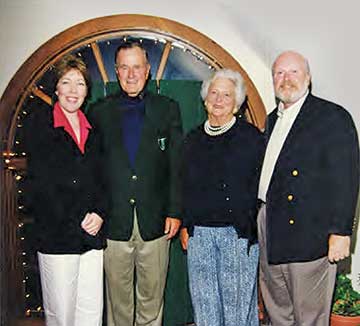 With President George Bush and Barbara Bush celebrating A&E’s Biography series in the mid-’90s
 -
 “We did Biography, which was the hot thing of its era—it put A&E on the map. And I said, ‘We’ve got a lot of history programming. Why don’t we do a history network?’ The History Channel began in 1995 and blew up.”
 -
 “We had a huge success co-producing Pride and Prejudice with the BBC. It launched Colin Firth’s career.”
 -
-
-
-
-
 “After I left, they hired Oprah. So my timing was not impeccable on that one.”
 -
-
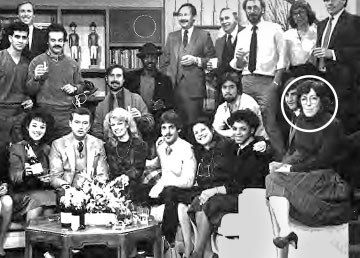 Staff with Regis, 1985
 -
 “They had this show Iron Chef, which was in Japanese with English dubbing. I said, ‘Wouldn’t this show be better if it were produced in English?’”
 -
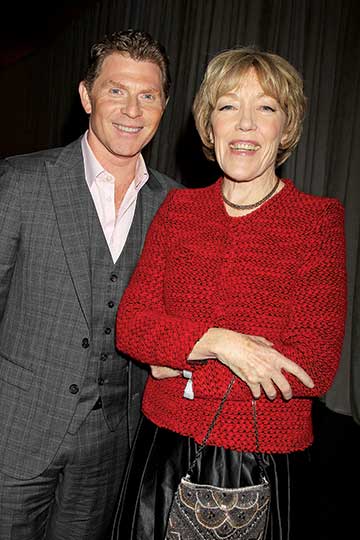 With Bobby Flay at Food Network’s 20th birthday party, 2013