How a Toxic Train Crash Brought an Ohio Town to a Halt
Three weeks after a Norfolk Southern train filled with hazardous chemicals caught fire in East Palestine, residents are still reeling.
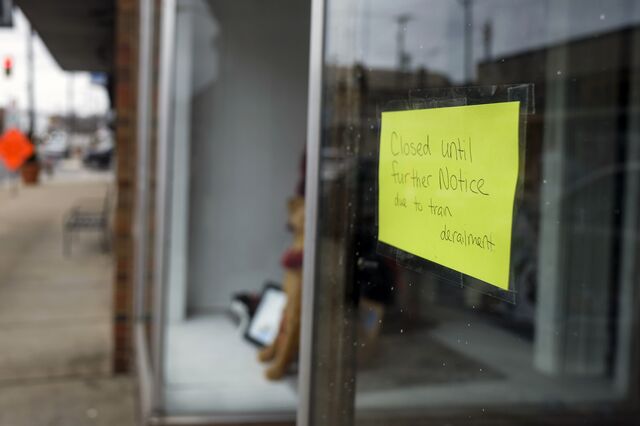
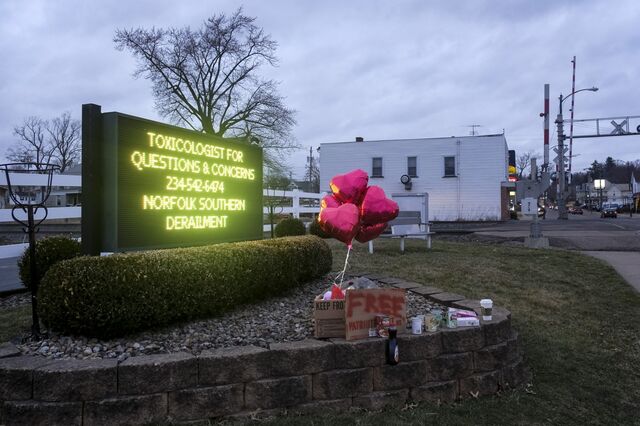
A broken, burned train car visible through trees in a backyard. Stacks of bottled water piled up on a porch. A note taped to a buthsiness window: “closed until further notice due to train derailment.” Three weeks after a Norfolk Southern Corp. train crashed and caught fire in East Palestine, Ohio, releasing hazardous chemicals into the air and water, the town’s residents have more questions than answers.
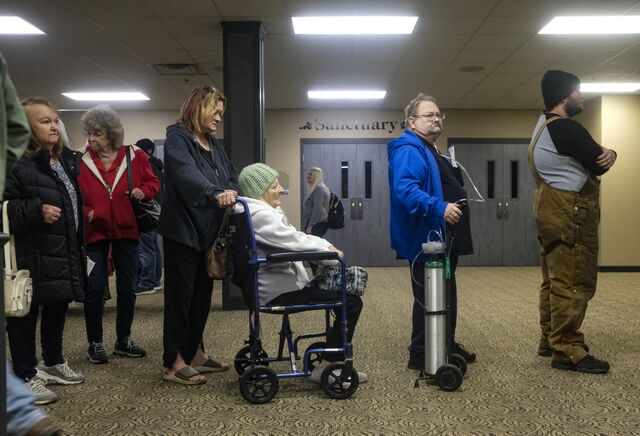
A preliminary report was released on Thursday morning. But on the ground in East Palestine, a town of fewer than 5,000 people near the Ohio-Pennsylvania border, the defining sentiment is limbo. While some residents have returned home, others are staying away. Some businesses have reopened, but others remain closed. State and federal officials have conducted environmental sampling, and assure residents that the air is safe to breathe and the water safe to drink — but many are still skeptical. Even if the air and water are safe now, some locals worry about exposure to toxic chemicals in the early days after the derailment. Four residents told Bloomberg Green that either they or their family members reported feeling symptoms ranging from coughing to nausea to headaches.
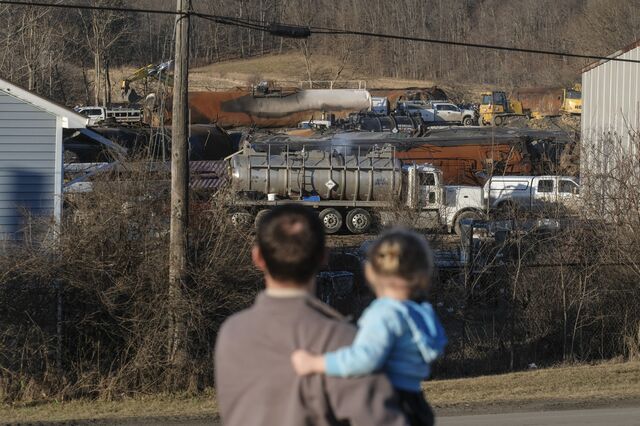
“How can it be fine?” says Joy Masher, who had to shutter her florist shop, Flowers Straight From The Heart, during the lucrative week before Valentine’s Day. “The railway needs to step up to the plate. All of their officials should be in town, walking [around] so everybody can talk to them, reassuring us. And they are not.”
On Feb. 16, Norfolk Southern Chief Executive Officer Alan Shaw published an open letter regarding the train crash, promising: “We will not walk away, East Palestine.” The company has pledged to pay for the crash cleanup; it also established a $1 million community fund, $1 million for a new community liaison and $4.19 million to directly assist families, according to Norfolk Southern spokesperson Michael Pucci. As part of a cleanup order from the Environmental Protection Agency, Norfolk Southern will have to “attend and participate in public meetings at EPA’s request and post information online.”
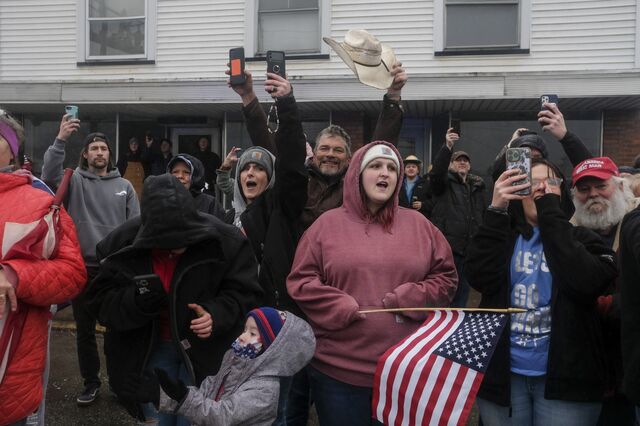
Anxiety in East Palestine has been compounded by an emergency response riddled with early missteps, from local officials warning that they would arrest residents who initially refused to evacuate to train operators pulling out of a public town hall at the last minute, allegedly over fear for staff safety. Early on, conspiracy theories and misinformation started swirling online in the absence of clear, unified messaging, stoking local concerns and breeding public mistrust in the official response. On Wednesday, former president Donald Trump visited the town, telling residents: “You are not forgotten.” Trump’s visit also put a spotlight on his administration’s rollback of railway safety rules.
The federal government has publicly ramped up its efforts over the past week, an escalation that culminated in the EPA on Tuesday issuing a legally binding clean-up order to Norfolk Southern. EPA Administrator Michael Regan also visited East Palestine twice in less than a week to talk with residents, officials and emergency responders.
“Let me be clear: Norfolk Southern will pay for cleaning up the mess they created and for the trauma they’ve inflicted on this community,” Regan said in a prepared statement.
Norfolk Southern put out its own statement shortly after Regan’s visit: “We are committed to thoroughly and safely cleaning the site, and we are reimbursing residents for the disruption this has caused in their lives,” it reads. “We are investing in helping East Palestine thrive for the long-term, and we will continue to be in the community for as long as it takes. We are going to learn from this terrible accident and work with regulators and elected officials to improve railroad safety.”
Many residents remember where they were at 9 p.m. on Friday, Feb. 3, when the Norfolk Southern freight train crashed, sparking an initial fire that grew as the night wore on. Of the train’s 150 cars, 38 derailed and 12 more were damaged by fire; 11 of the 38 derailed cars were carrying hazardous material.

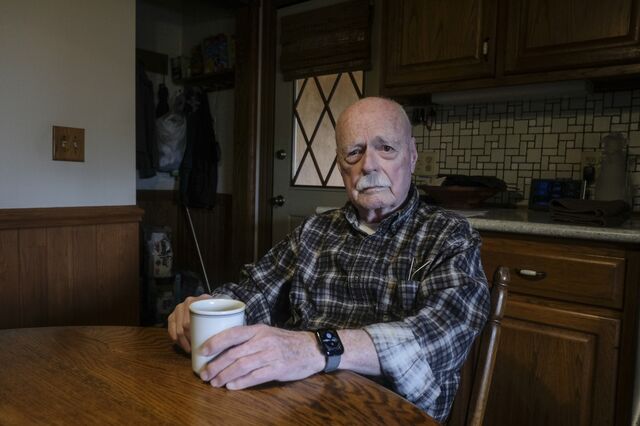
“My wife thought she saw flames in the distance but we’ve got a hill and lots of trees,” says resident Charlie Hutchens. “So basically we learned what it was when a state trooper knocked on our front door and said: ‘Time to go.’”
Brenda Foster noticed the fire trucks and response vehicles before the crash. “When we come out, it’s right there. Like I have a video of it,” Foster says, pointing down her street. “It was just crazy how it was growing. It was quite scary.”
Within an hour or so, Foster and her 87-year-old mother left to stay with family in a different part of town. Not knowing what to take with her, Foster grabbed her recently deceased husband’s remains. “That’s all I could think about grabbing,” she says. “I didn’t think about clothes or anything else. I just wanted to get him and go.” At the end of the weekend, her relatives’ home was also evacuated. “So we had to go to a hotel then,” Foster says. “We were there for three days.”
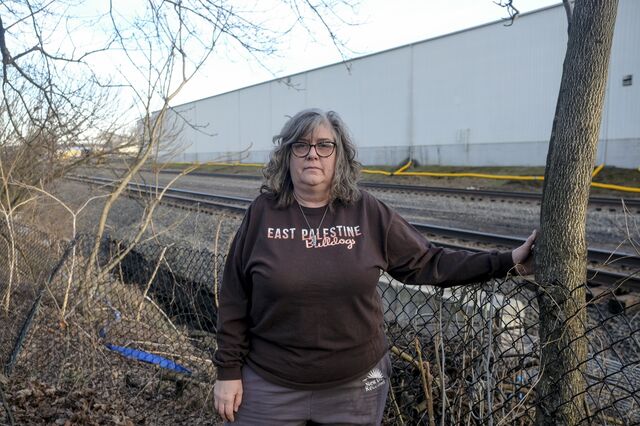
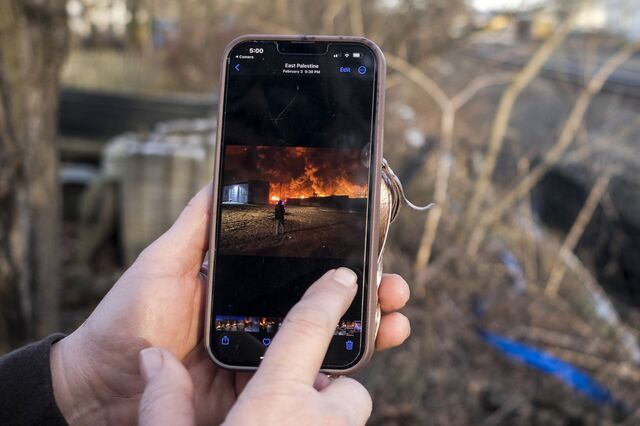
The later round of evacuations was prompted by the discovery of rising temperatures in at least one train car carrying toxic chemicals, prompting fears of a potentially catastrophic explosion. To avoid this, state officials and Norfolk Southern oversaw a controlled explosion on Feb. 6, which involved intentionally venting vinyl chloride, a known carcinogen, into the air. The local evacuation orders weren’t lifted until Feb. 8. Foster returned home at that point, but many others did not.
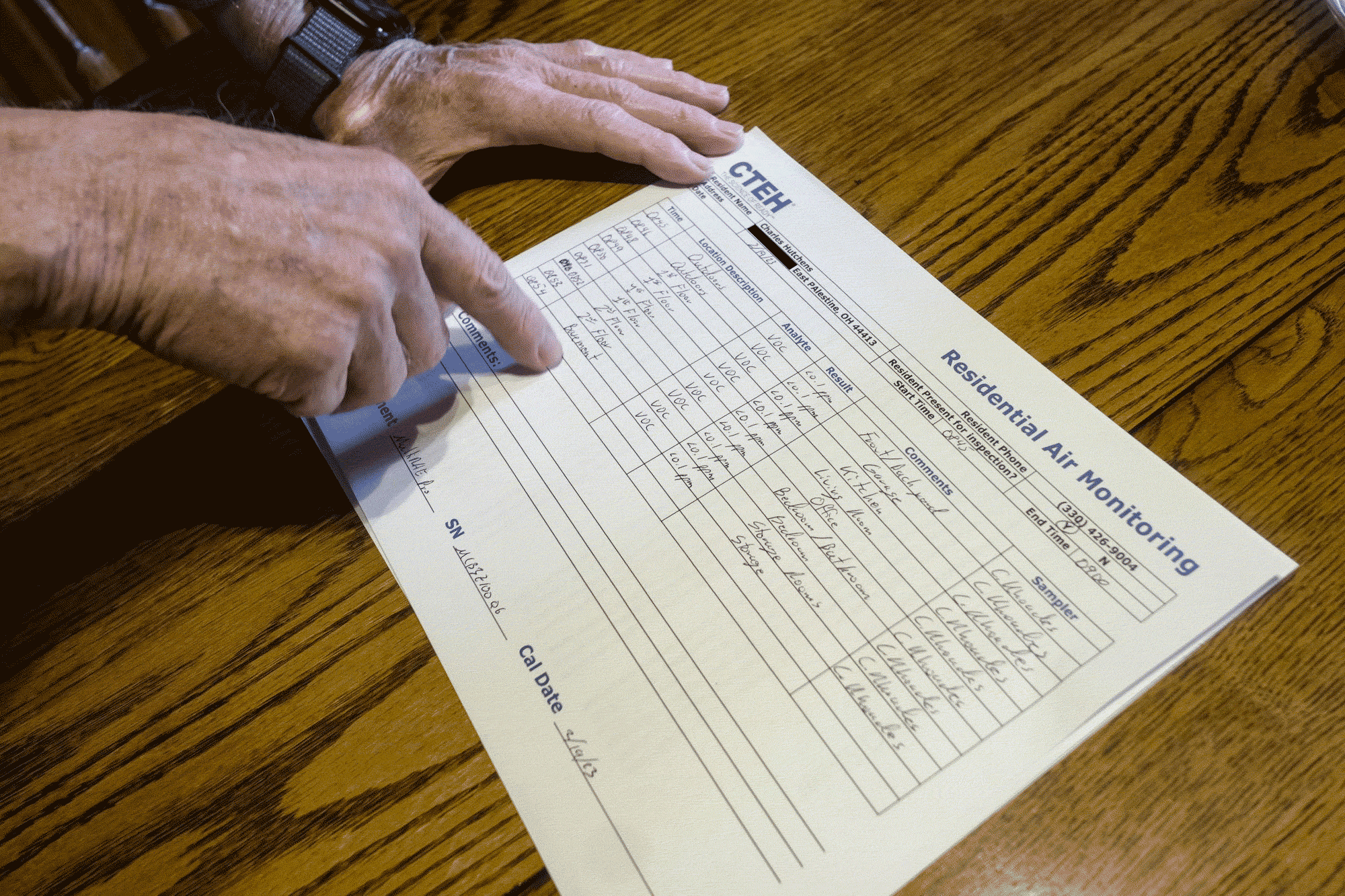
The EPA started some air monitoring on Feb. 4 and expanded it in the following days to include stationary monitors set up around town, as well as roving monitors and a plane to look for chemicals from above. The EPA says it “did not detect any chemical contaminants of concern” during the controlled burn or afterwards, other than some particulate matter associated with the fire. Still, many residents didn’t feel safe returning home. So Norfolk Southern and the EPA began offering voluntary in-home air quality screenings. As of Feb. 20, at least 551 homes had been screened. The EPA says there have been “no exceedances for residential air quality standards.” In other words, any chemicals found were detected at levels below what is considered dangerous.
Foster thinks she was one of the first to request the screening; she recalls dialing the number as soon as it showed up on the television screen during a press conference. “It took them until Saturday to come in and it says everything is OK,” she says. “I’m a little worried. My basement still smells funny but everything else seems to be OK. But I haven’t had anything professionally cleaned. I can’t afford to do all that.”
Hutchens also opted to get the in-home screening. “My wife got nervous about it,” he says. “She’ll feel better when she sees the results of the scans. And they were everywhere with all kinds of strange looking equipment doing a lot of ticking and humming. So they know what they are doing, they are professionals. Glad to have them here.”
“Your home has to be your safe haven,“ says East Palestine Mayor Trent Conaway. “If you’re not feeling safe in your return, please, we can offer them to come back and retest.”
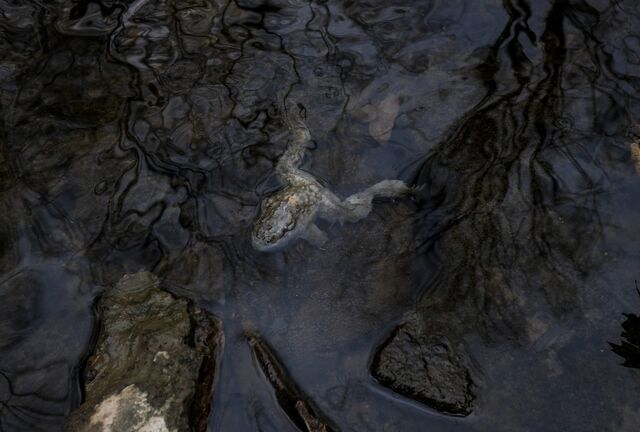
It’s not just the air. Residents are also concerned about the safety of the water. The train crash spilled chemicals, butyl acrylate among them, into nearby waterways including Sulphur Run and Leslie Run. State officials have confirmed the train crash killed nearly 3,000 aquatic life but estimate the true death toll to potentially be much higher including about 38,000 minnows, or small fish, and 5,500 other aquatic life, according to a Thursday update by the Ohio Department of Natural Resources. Water sampling revealed some chemicals even made it into the Ohio River. While the chemicals are now barely detectable in the massive, fast-moving river, Sulphur Run continues to be contaminated.
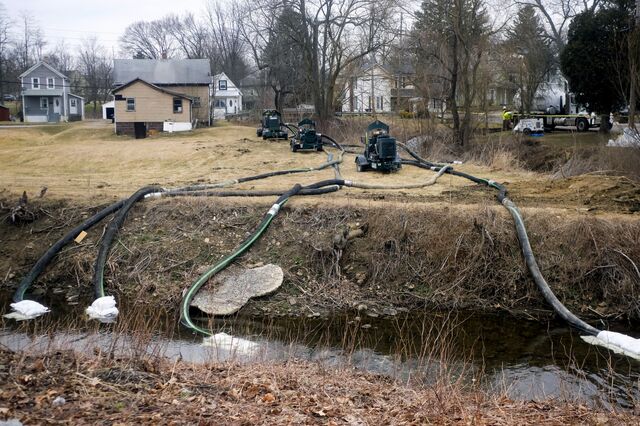
As of Feb. 22, about 4,500 cubic yards of contaminated soil and 1.6 million gallons of contaminants and contaminated liquid have been collected from around there, according to the Ohio Emergency Management Agency. Residents are being told to stay away.
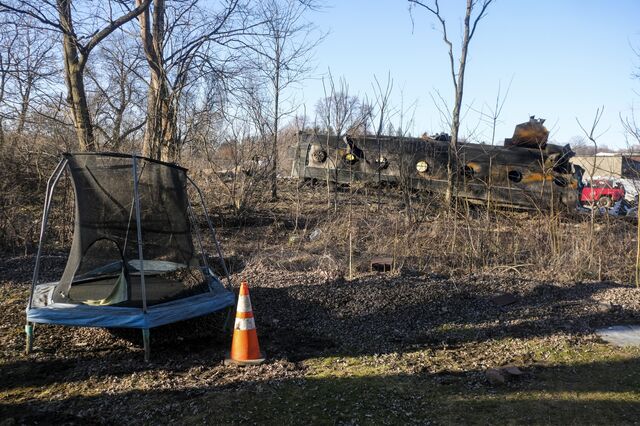
“The affected portion of Sulphur Run has been dammed to protect water downstream,” Norfolk Southern’s Pucci wrote in an email. “Environmental teams are treating the impacted portions of Sulphur Run with booms, aeration and carbon-filtration units.”
Additional testing of East Palestine’s public water supply by both Norfolk Southern and county officials found that the water is safe to consume. But for residents who get water from private drinking wells, officials suggest using bottled water until testing can be done. So far, at least 56 private wells have been tested.
In the meantime, more officials from the EPA, Federal Emergency Management Agency, the Pipeline and Hazardous Materials Safety Administration and the Department of Health & Human Services are coming to town. And residents are left to puzzle out whether they feel comfortable staying. “It’s just the long term that we're really worried about, and I worry about it more for my grandkids than anybody. They’re little, you know? I worry about that,” says Foster. “But I mean I'm not moving. I’m not going anywhere. This is my town and I love it.”
(Updates with fish death count estimates by the Ohio Department of Natural Resources in the 18th paragraph, following an earlier update with the release of the preliminary report in the second paragraph.)
More On Bloomberg