
The Power of Out: Being LGBTQ+ in APAC
August 05, 2020
During Pride Month, the LGBTQ+ community celebrates equality and acceptance around the world. In countries like Japan, however, this group is still fighting for full recognition, rights, and inclusion.
Despite being the first Asian country to legalize consensual homosexual acts in 1880, Japan has yet to legalize same-sex marriage. Furthermore, a recent survey suggests more than 40% of Japanese parents would feel uncomfortable knowing their children were homosexual, while a 2018 study showed that 37% of Japan’s LGBTQ+ community would refrain from coming out to their colleagues, with 54.5% reporting a lack of sexual diversity support systems at their workplace.
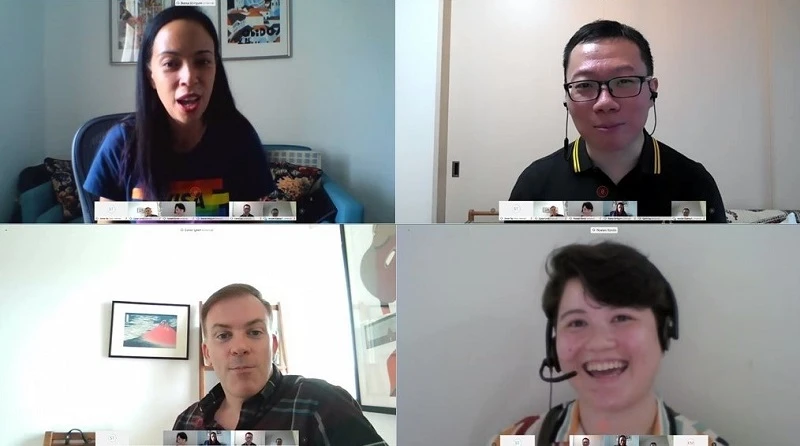
In June, Bloomberg and Visa Inc. co-hosted “The Power of Out,” an exclusive virtual discussion with panelists from Japan and Singapore on their personal experiences of coming out, living as an LGBTQ+ individual in their country, and the importance of safe spaces and allyship. The panelists included Calvin Lau, an enterprise data sales support representative from Bloomberg who is also co-lead of the Japan chapter of the company’s LGBT and Ally Community (BPROUD), Noelani Kondo, a Bloomberg customer support representative; and Conor Lynch, head of Consumer Solutions, Asia Pacific at Visa.
The Power of Out
Growing up in the conservative and religious Ireland of the late 80’s and 90’s, Conor always found it difficult to be himself. After relocating to Japan and then Singapore, however, coming out brought distinct advantages. “Everything was better after I came out,” he explained. “For instance, I wouldn’t be able to manage my team at work well if I wasn’t honest with them, because they need to be able to trust me. It’s also easier to be a good colleague when you’re not faking it.”
Calvin’s upbringing followed a similar trajectory. “Growing up in a Christian household drilled into me that being heterosexual was the only way,” he said. It wasn’t until he’d been at Bloomberg for a while that he understood the importance of being himself. “I was introduced to a few communities, including BPROUD, on my first day of work. However, I didn’t come out until I realized how constantly hiding my authentic self was making it difficult to connect with my colleagues on a meaningful, personal level.”
Despite being born in the U.S., Noelani spent her teenage years in rural Japan, where a lack of LGBTQ+ recognition and role models made coming out challenging and confusing. The situation improved when she moved to Tokyo, met other LGBTQ+ people, and discovered that being open about her identity made her more successful and happy. “Being able to freely express myself boosts the quality of my work and frees me of the stress I’ve always felt from hiding my true self,” she explained.
Inclusive workplaces
A key takeaway from their discussion was the importance of inclusive workplaces in helping LGBTQ+ people feel comfortable and reach their full potential. “Inclusion means a lot to me,” said Calvin, “because I’m from Hong Kong, am openly gay, and joined an American company in Japan. These elements are all considered foreign, given my background.” He went on to explain that he often looks for cues to see if he’ll be welcomed in certain places. “Finding out that the company was a strong advocate of equality was hugely reassuring. It made me feel that I could come out.”
In fact, it was Calvin’s confidence in Bloomberg’s inclusivity that made Noelani want to join the company. “When I was a university student, I saw Calvin speaking on a panel about how he felt comfortable being openly gay at his workplace,” she remembered. “Inclusion can create a safe space for a gay person like me, and the rest of the LGBTQ+ community.”
For Conor, inclusion in the workplace has a direct impact on his performance. “I think inclusion is important because it’s critical that you’re able to be yourself,” he said. “You can forget about hiding and people judging and feeling ashamed, and just concentrate on work and making a good contribution.”
Allyship
Inclusive workplaces don’t just happen, though. Allies are instrumental in the creation of LGBTQ+ safe spaces. For Calvin, being an ally requires two things: an open mind and respect for others. He believes these elements are essential to achieving mutual understanding and empathy. “LGBTQ+ and ally groups help create a safe space both for LGBTQ+ employees to feel comfortable coming out and for allies to learn how to support us without the fear of offending the community,” he said.
Conor’s advice for effective allyship is simple: “Don’t make a big deal out of it, because it’s not. Allies can show visible support and just let LGBTQ+ colleagues know it’s OK to be themselves.” Noelani agrees that even the tiniest of visible gestures can go a long way. “I saw colleagues with small rainbow ribbons on their name tags and that made me feel a hundred times better and safer,” she said. “It’s really the small things like this that create a safe space.”
At the end of the day, being a good ally is easy, and the potential benefits for LGBTQ+ people, workplaces, and societies are huge. “Being an ally is about showing support,” explained Noelani. “You might be changing someone’s life — it changed mine.”
Read more:
Identity in quarantine: The impact on LGBTQ+ employees
For LGBTQ+ people, coming out is a lifelong process
Understanding our intersectionalities: embracing multiple identities within the LGBT+ community