
A diverse, empowered newsroom reflects our changing world
November 14, 2018
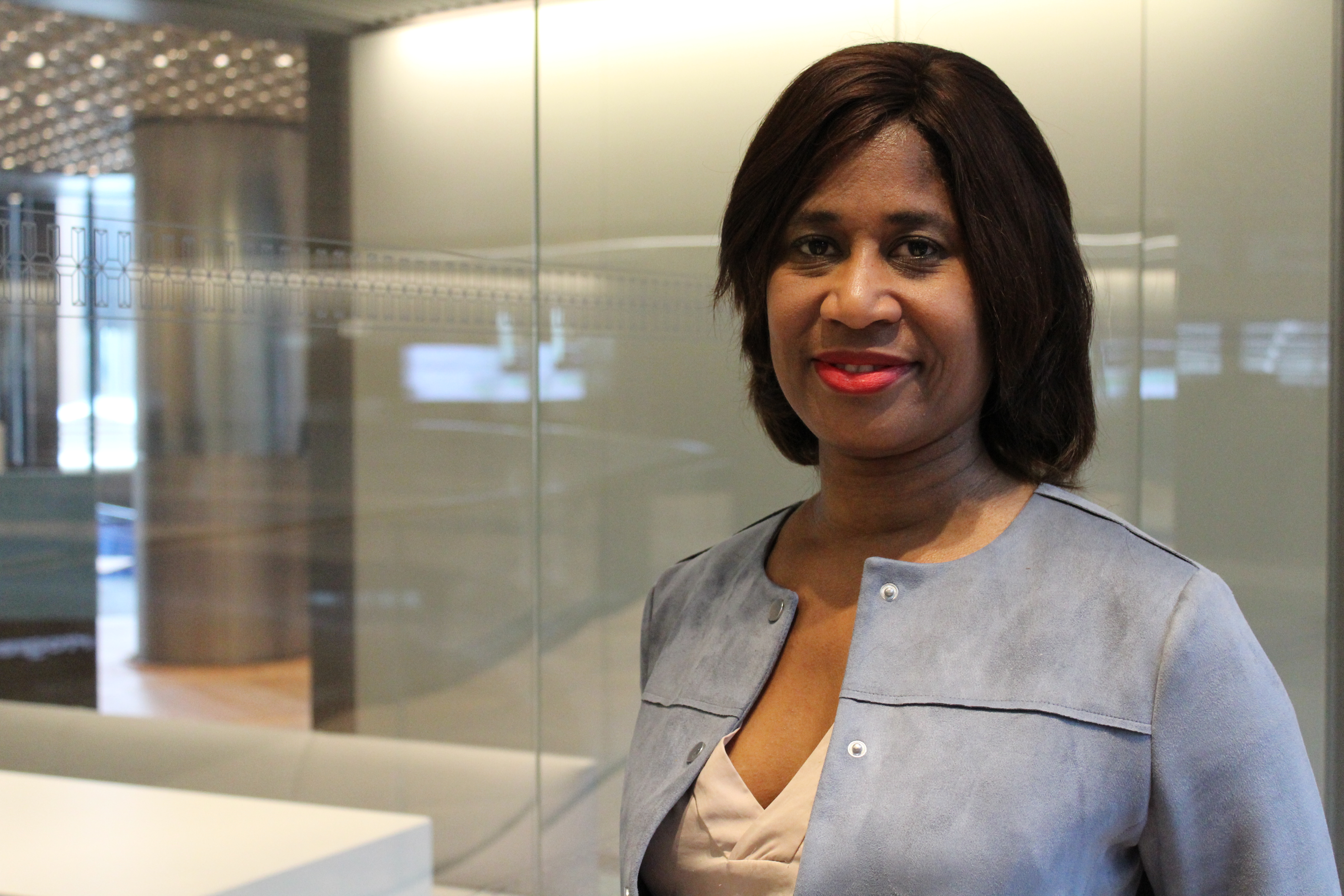
In her 22 years at Bloomberg News, Jacqueline Simmons has seen the company grow in its breadth of comprehensive, global business coverage – and its commitment to black employees in the newsroom.
Here, she shares her formative experiences, how she’s grown professionally at Bloomberg, and where she finds continued inspiration.
A strong foundation in justice and journalism
I grew up in a mixed-race neighborhood in Phoenix, blissfully unaware that inequality and race were “a thing” until I entered private school with my brother. We were the first black kids in our primary school, which was a harsh wake-up call.
While it took me a long time to become truly proud of my heritage and what makes me unique, that was a real learning experience that taught me how to articulate my views on inequality. My brother and I later attended a mostly white university in California, where the school paper published a poorly documented and woefully imbalanced story about my brother taking a leave of absence. That prompted me to write a strongly worded response to the editor and head of the journalism department. They offered to publish it, and later asked me to become opinion editor. It was during the Tiananmen Square and Perestroika eras, which sparked my interest in international affairs and journalism in general.
Covering the world with Bloomberg News
I’ve had the opportunity to spend an amazing 19 years with Bloomberg News in France, covering consumer companies, deals, and investment banking. That said, my shift to London and promotion in 2015 to run our Global Business coverage was a marquee moment because it widened my perspective on all things global: China, Washington, trade, tech disruption, diversity…it’s a long list.
With this new platform, I’ve had the latitude to seek out new opportunities. I was proud to be part of our inaugural Bloomberg Business of Equality Summit in New York this year, to emcee the event, to interview Chelsea Clinton, and contribute to the continuation of the initiative. It was a great example of how we can get big names into our doors and create buzz and visibility around our content and efforts to promote diversity in the workplace. I was equally excited to interview the U.K. activist and investment manager Gina Miller in our London office. She’s a woman of color who’s experienced phenomenal racism in the U.K. The feedback we saw from the audience, mainly students of diverse backgrounds, was heartwarming.
Driving D&I on a daily basis
I find it’s important to push reporters and teams in the newsroom to get out of their comfort zone on topics around gender and diversity, especially when they don’t feel well-suited to tackle them. It might be a story that’s having impact on one of the companies they cover, or looking at a conflict through the prism of how it creates inequality in an industry. Covering these stories, and sometimes moving into unfamiliar territory, ensures that we continue to have our fingers on the pulse. It’s also essential to staff the newsroom with diversity in mind, seeking out candidates with different life experiences and points of view bolsters our perspective as an organization.
The power of mentoring and representation
At Bloomberg, we’ve become more instinctive at pausing when we consider how we promote and elevate diverse staff. That’s not a mindset that was necessarily in our DNA when I joined in 1996. That pause means we force ourselves to think outside the box and consider opportunities for diverse talent.
I’ve had support in the upper echelons of the newsroom and throughout my early career to explore options, get trained, and try new things. As a member of a minority group, I feel obligated to continue to create opportunity and elevate ethnic and female talent. What’s the point of being in a position where you can influence workplace outcomes for good, and choosing not to? You can be fair, and egalitarian, while considering what the broader population looks like. The experiences I’ve accumulated over the last quarter century, paired with my childhood experiences, have made me a more articulate and passionate advocate for diverse leadership and mentoring.
I feel privileged to have been recognized this year as one of Britain’s most influential black people by the Powerlist and a finalist for the Black British Business Awards, two organizations that are doing great work to further promote inclusion and representation of black professionals throughout the UK.
Looking to the future
What inspires me isn’t one specific thing but a mindset. I’m easily bored, and routine bores me — I need to shake things up and constantly have a new milestone in my sights. It could be anything from taking on a complicated challenge, like a panel event on an unfamiliar topic, to doing a 10K or signing up for a creative writing class. I haven’t actually done the latter two yet, but they’re on my list!
Explore more Communities at Bloomberg