
Fast Forward: Transformative technology in the evolution of the buy side — Kathryn Kerner
July 16, 2024
Our Fast Forward series explores how the buy side deploys transformative technology to prepare for the next chapter of the industry.
Fast Forward with Kathryn Kerner, Head of Data Analytics, New Zealand (NZ) Super Fund
In this edition, we speak to Kathryn Kerner, Head of Data Analytics at the NZ Super Fund, a sovereign wealth fund with more than NZ$75 billion in assets.
Building a Data-Driven Powerhouse at NZ Super Fund
As a seasoned data and analytics leader, Kathryn Kerner looks beyond current financial sector technology trends. Here she explores factors that drive long-term investment excellence and explains how best practices in technology empower the NZ Super Fund to strengthen its investment approach.
“Even as technology is constantly evolving, chasing trends isn’t enough. The key lies in identifying which technologies can truly drive investment excellence.”
Kia toitū te haumi hei hua mā ngā tāngata katoa o Aotearoa
Sustainable investment delivering strong returns for all New Zealanders

Since I joined the NZ Super Fund as the Head of Data Analytics, I have been guided by this purpose statement. It recognizes we’re here to preserve and grow what we have for the benefit of those who come next.
My team and I work directly with the investment team at the Fund to transform data – through the application of quantitative modelling, statistical analysis, and advanced analytical modelling – into actionable insights to drive smart investment decisions.
Identifying technologies to drive investment excellence
We look at key trends within the macro environment, evaluating how technology can help us navigate and make informed decisions based on larger economic shifts.
However, even as technology is constantly evolving, simply chasing trends isn’t enough. The key lies in identifying which technologies can truly drive investment excellence. This is where some data analytics teams can fall short, focusing solely on the ‘what’ (the technology) and neglecting the ‘why’ (the specific problem or opportunity).
The critical factor is finding the right fit between the investment question and the technological solution. The focus should really be on finding the most effective approach—whether it’s new or established technology—to achieve the desired results. Even for complex problems, the solution might be surprisingly simple.
It has become increasingly difficult to find such solutions without considering its potential, just like how it is important to consider the rise of Generative Artificial Intelligence (Gen AI) that is revolutionizing various fields. However, we have to remember that AI is not a new invention. Traditional AI models have actually been around for a long time, and they continue to play a valuable role.
Analytics-led investment decision-making
Data analytics allow us to identify opportunities and act swiftly, ensuring we remain agile while aligned to a long-term focus. This combination of foresight and agility allows us to fine-tune our investment decisions effectively, leverage emerging technologies such as Gen AI to enhance our analytical capabilities, and refine our portfolio allocations. The pandemic has certainly underscored the importance of agility and resilience in our operations.
Optimizing today to innovate for tomorrow
We have made significant strides in operational efficiencies by actively enhancing productivity, automating processes, as well as bolstering the robustness and scalability of our models. Not only do we optimize our current practices, but we are also laying the groundwork for future innovation and adaptation to changing market dynamics.

Aligning with evolving industry standards
The constant pursuit of best practice to promote innovation
From a quantitative modelling and long-term perspective, it is essential to adopt best practices when developing solutions that have longevity and adaptability. Beyond just being beneficial in the short term, such solutions also need to be robust, reusable, scalable, and flexible. Incorporating these principles into our technology infrastructure goes beyond implementing stringent cybersecurity measures. We also need to ensure that our modelling techniques and technologies are up to par.
Legacy systems can pose challenges, so it is crucial to prioritize modernization efforts that align with industry standards and promote innovation. Additionally, our solutions should be easily understood by third parties to foster collaboration and enable us to leverage external expertise effectively. By adopting these measures, we can fortify our technology infrastructure and position ourselves for continued success in the ever-evolving landscape of data analytics and quantitative modelling.
Talent management and skills development
Mā te kotahi ā-kapa, mā te kounga ā-haumi, ka tino eke ki tua
An inclusive team creating a better future through investment excellence
At the NZ Super Fund, our vision is to build an inclusive team that creates a better future through investment excellence. We recognize the importance of building a high-performing team and an inclusive workplace culture.
Building a tech-savvy, collaborative dream team
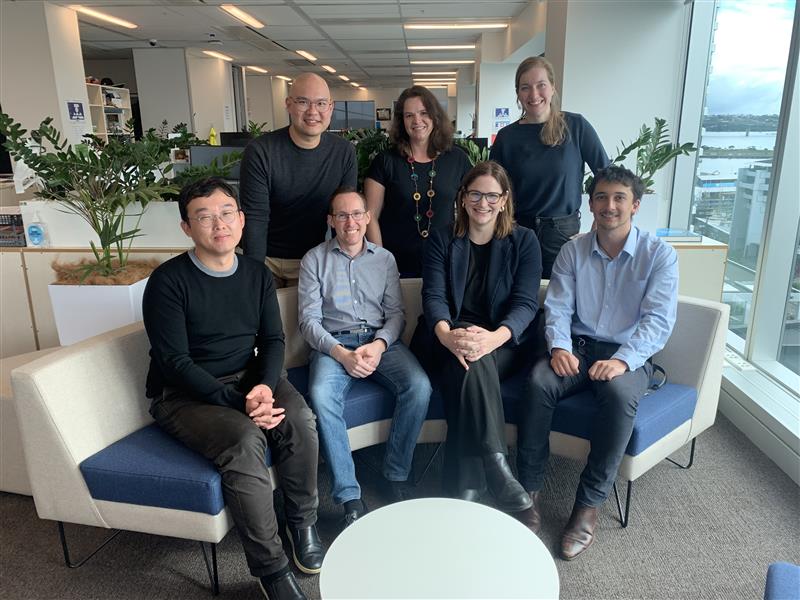
We seek out ‘unicorns’ – individuals with profound technical and quantitative skills who excel in communication and collaboration. These skills are rare, but crucial for our team’s success.
Currently, our team comes from diverse science, technology, engineering and mathematics (STEM) backgrounds, including individuals who specialize in computer science, physics, financial engineering, economics and maths. This STEM foundation is essential, but it is equally important that everyone enjoys working together and translating complex ideas into clear solutions.
Even with advancements in Gen AI, human expertise will remain vital. We need people who can interpret the outputs of models, explain their reasoning, and connect the results to real-world problems. Even though strong technical skills are necessary, the ability to translate them into actionable insights is what really matters at the end of the day.
Cultivating a high-performance culture
A role in data analytics naturally appeals to individuals who thrive on continuous improvement and are driven to excel. Given that the field of data science is relatively new, there is a constant need to embrace learning and growth opportunities. It is essential to instil a culture of commitment to improvement among all members of the workforce, regardless of their level of experience.
I am dedicated to fostering a high-performing team by providing avenues for upskilling and professional development. This includes investing in training programs, encouraging participation in relevant courses and certifications, and facilitating knowledge-sharing initiatives within the team. By prioritizing talent attraction and retention strategies that emphasize ongoing learning and career advancement, we can ensure that our team remains agile and adaptable, ready to leverage evolving technologies to their fullest potential.

Looking back … and fast forward
The essential tools in my career journey are sheer grit and resilience, qualities which have helped me to overcome obstacles and seize opportunities. However, to truly thrive in the ever-changing world of quantitative finance, we all must embrace continuous improvement, foster diversity, and build resilience with a diverse skill set.
My journey in quantitative finance reflects a deep commitment to continuous learning and best practices, mirroring the innovative spirit of the NZ Super Fund.

Early on in my career, I faced the challenge of being the only woman on the team and I knew I wanted to change this. As a people leader today, I prioritize diversity and inclusion, working to cultivate a team environment where no member feels isolated due to race or gender.
With a background in macroeconomics, I strongly believe in the value of scenario planning, which comes second nature to me. Having a diverse skill set sets you up for a strong Plan B—a contingency plan—to capitalize on when things take an unexpected turn and to ensure that you are always prepared to face any eventuality.