
New Digital Archive Preserves Memories of London’s Greatest Archaeological Discovery
December 18, 2018
1954 Temple of Mithras Discovery Remembered
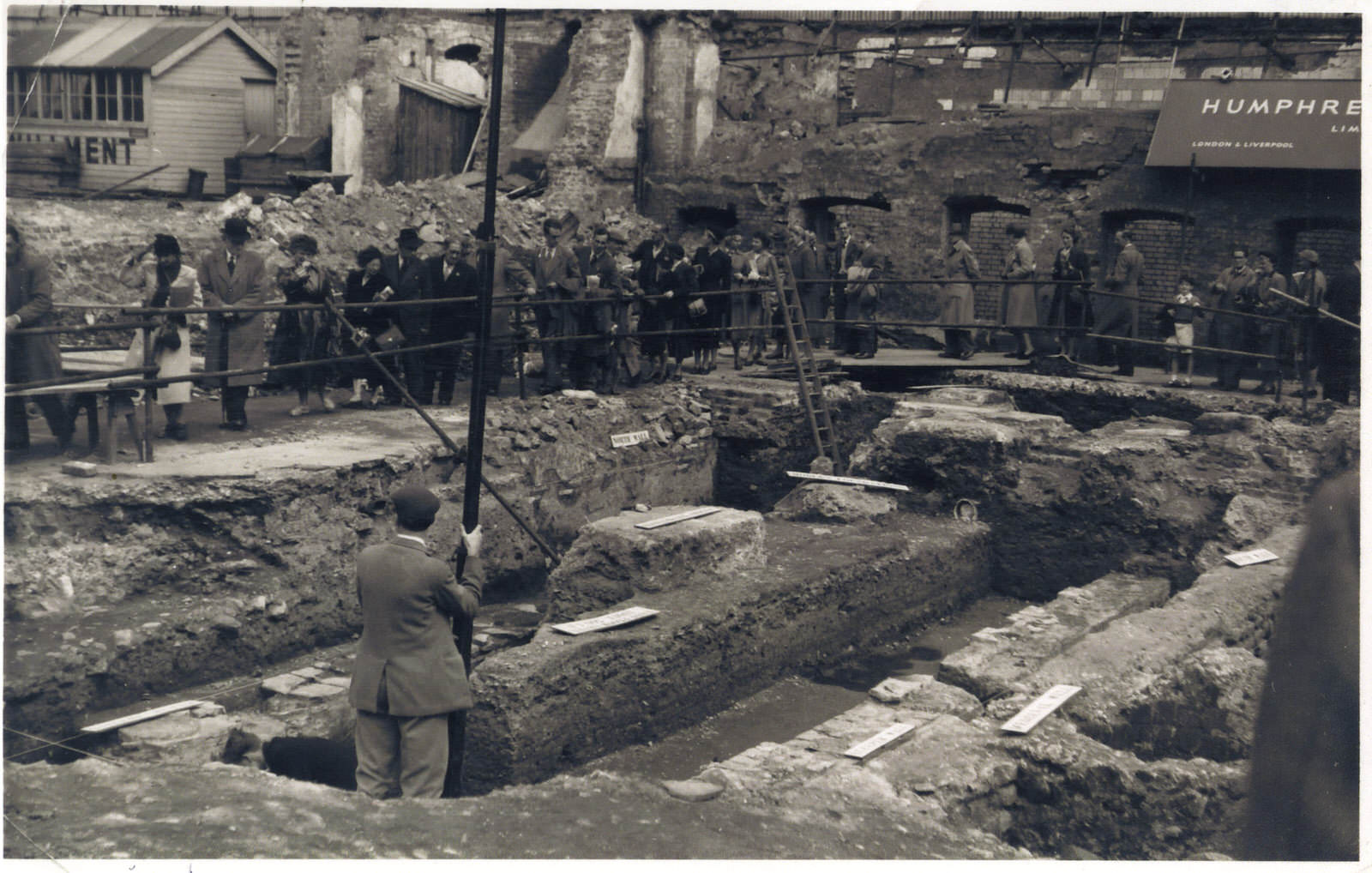
Visitors queue to see Temple of Mithras remains in 1954. Photo by Robert Hitchman (c) MOLA (1)
In 1954, the chance discovery of the remains of a Roman temple to the God Mithras in the rubble of post-war London captured public imagination, with tens of thousands of visitors flocking to the site to marvel at the remains. Today – one year after the restored temple was re-opened to the public at London Mithraeum Bloomberg SPACE – a new digital archive published by Bloomberg and MOLA (Museum of London Archaeology) invites the public to explore first-hand accounts of what it was like to be part of London’s greatest archaeological discovery.
In September 2014, on the 60th anniversary of the temple’s discovery, Bloomberg and MOLA embarked on an oral history project to capture recollections of the historic event while it is still in living memory. More than 100 people responded to a call out on BBC Radio 4 and came forward to share their memories, photographs, letters, diary entries, tickets and newspaper clippings, giving archaeologists and historians a rich picture of what it was like to experience the discovery first hand. Now, the oral histories, photography and ephemera can be explored at www.londonmithraeum.com/oral-history.
Earlier this year, Bloomberg invited the oral history project participants to experience the restored temple remains at London Mithraeum Bloomberg SPACE, nearly sixty-five years after they first encountered them. A short film capturing their responses has been released to complement the digital archive.
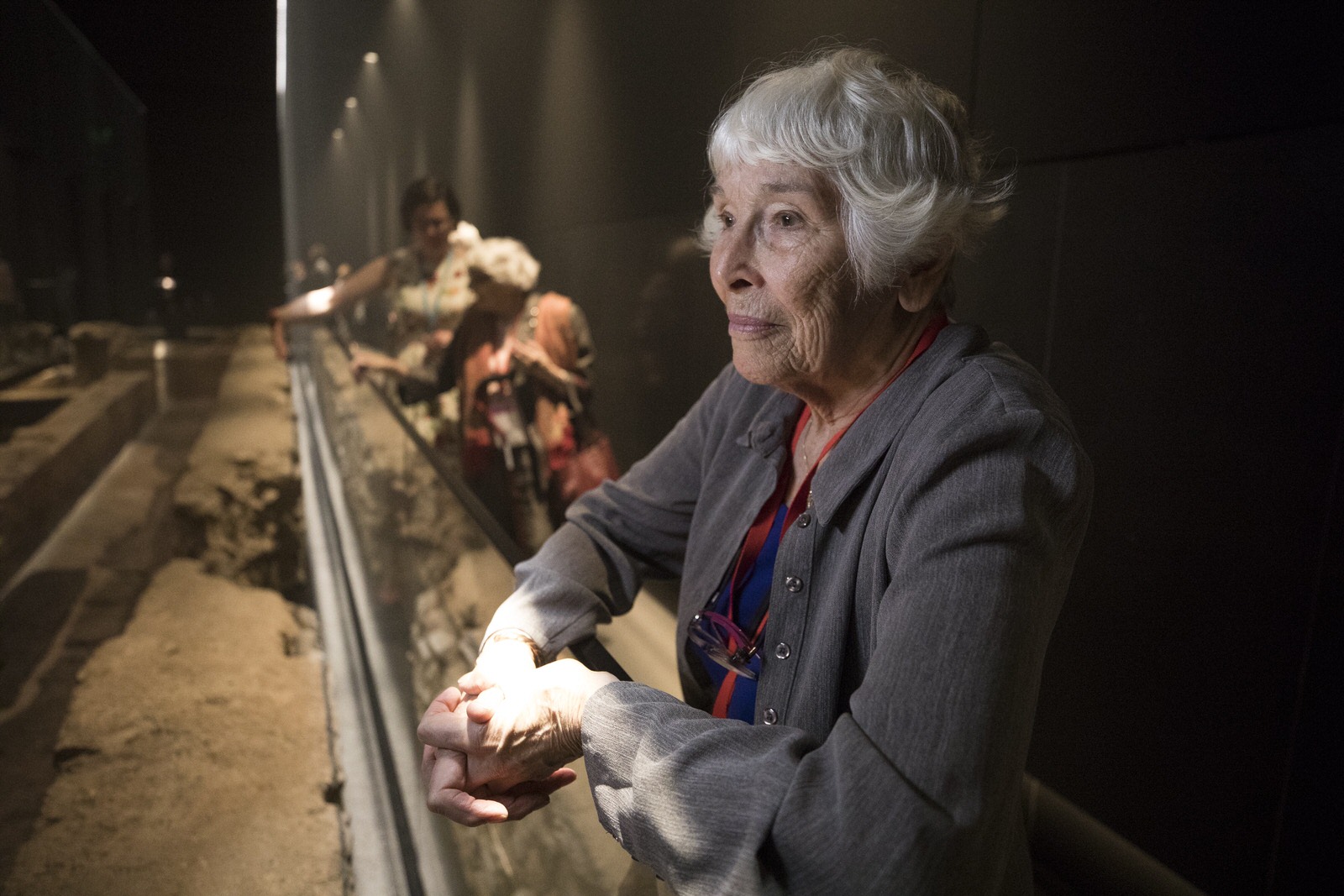
Inspiring Stories
The oral histories show us how visiting the temple inspired those that visited it, becoming a symbol of hope and survival in the aftermath of war and profoundly affecting the course of the lives of some of those who visited. One such person, Dr Peter Marsden, went on to become an eminent archaeologist:
“In 1954 I was a 14 year old school boy…I knew nothing about archaeology…I joined the queue of thousands of people…then the walk around the site and I thought this was amazing, the discoveries were incredible…then I got the thrilling opportunity of digging on the site so I went back…and it was an hour and half before I found the corner of a Roman well…this was my first day on what was to be a career in archaeology.”
Informing the Reconstruction
The stories and ephemera shared during the Temple of Mithras oral history project also played a vital role in informing the reconstruction itself.
In 1962 the temple was dismantled and reconstructed, 100 metres away from the site of its discovery, above a carpark. When Bloomberg acquired the site in 2010, an interdisciplinary team of artists, designers, conservators and archaeologists was appointed to build a more faithful, authentic and creative reconstruction, accessible to the public for free at London Mithraeum Bloomberg SPACE.
Archaeologists began by studying original drawings, models, photographs and newsreel footage from 1954 to create new construction plans for the temple. Authenticity was very important to the team and contributions to the oral history project have made a significant contribution towards improving the accuracy of the reconstruction.
Inspiring New Audiences
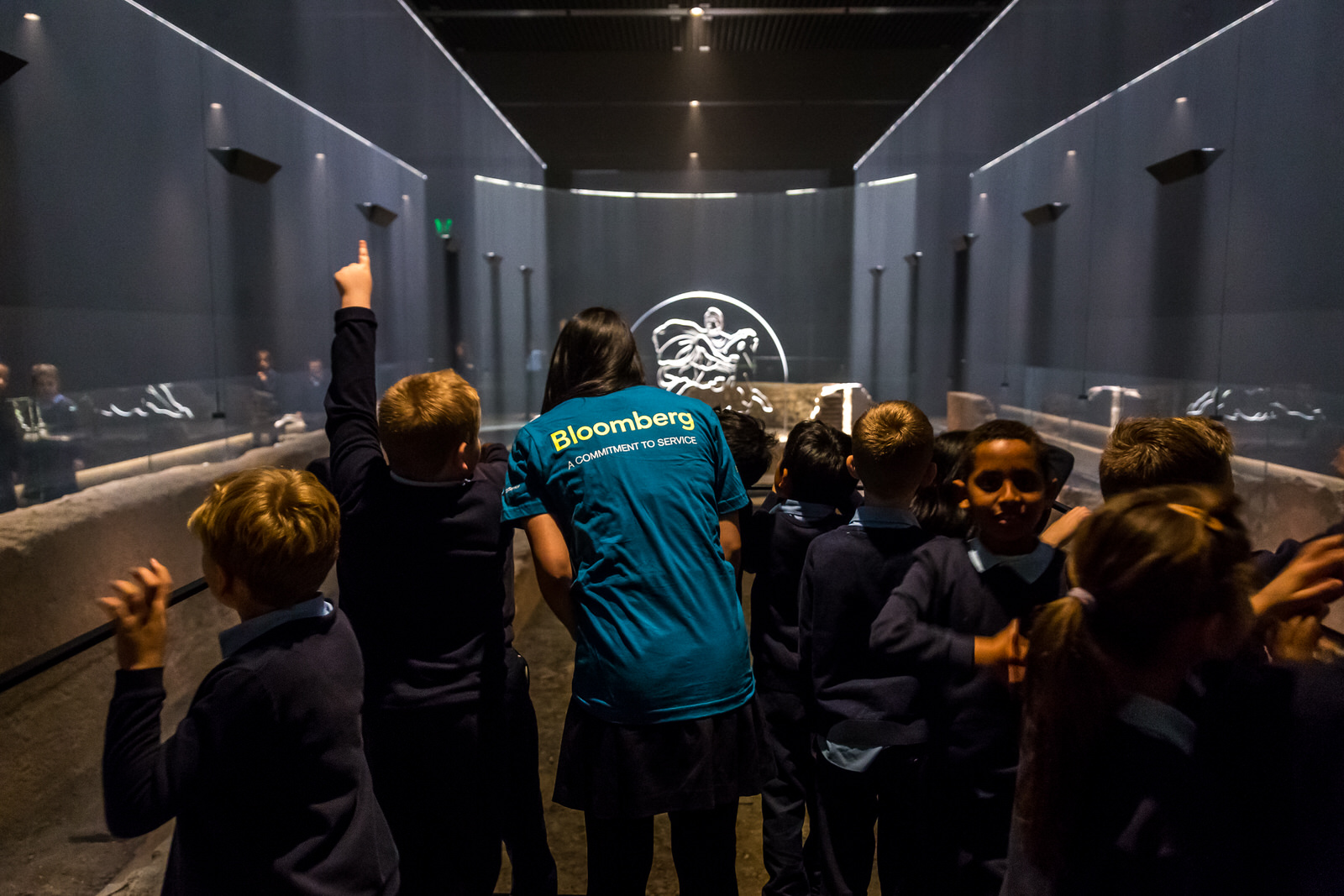
The Temple of Mithras continues to capture the imagination of the public. Since it opened in November 2017, London Mithraeum Bloomberg SPACE has welcomed more than 100,000 visitors and received many awards and accolades, including being named among TIME Magazine’s World’s Greatest Places and receiving the British Archaeological Award for the Best Public Presentation of Archaeology 2018.
London Mithraeum has also established itself as a valuable learning centre with its free schools programme. The specially designed education programme supports the National Curriculum and, in its first year, has engaged more than 1,000 school children from 28 schools in hands-on learning activities exploring archaeology, Roman history and the story of the Temple of Mithras. Ninety-six percent of teachers have rated the programme “Outstanding” in its first year.